It is July which means no opinions will be handed down this week or the next. We won’t hear from the Mississippi Court of Appeals until July 19 or the Mississippi Supreme Court until July 21.
I may blog some other content during this time, or I may just enjoy the breather.
The Mississippi Supreme Court handed down three opinions today: a case that resolved a fight over the Mississippi Division of Medicaid’s efforts to recoup overpayments to a senior care facility, an MTCA issue that wasn’t, and a post-conviction death penalty decision regarding a request to transfer DNA evidence.
Wilkinson County Senior Care, LLC v. Mississippi Division of Medicaid, 2020-SA-01332-SCT (Civil – State Boards and Agencies) Affirming the chancery court’s order allowing the Mississippi Division of Medicaid to recoup a substantial overpayment made to a senior care facility for the years 2002-2003 that the DOM did not demand until 2011, holding that the delay did not bar DOM’s recover because (1) neither equitable estoppel nor any other legal or equitable principles barred the claim; (2) the decision was not arbitrary and capricious, clearly erroneous, or unsupported by substantial evidence; and (3) the delay did not violate the facility’s due process rights. (9-0)
Strickland v. Rankin County School District, 2019-CT-01669-SCT (Civil – Personal Injury/MTCA/Negligence) Affirming the trial court’s grant of summary judgment in favor of the school district, juking the question of whether the defendant was entitled to discretionary function immunity (that split the COA 5-5) and holding that the plaintiff had not established the basic element of negligence where the evidence provided by the plaintiff–a cross-country runner for the school–was stung by a wasp, was examined by at least one coach, was told to “man up” and run the race, began running, felt dizzy just after the mile marker, and fell and hit his head. (5-1-2) (Justice Ishee concurred in result only, joined in part by Chief Justice Randolph. Justice Kitchens dissented, joined by Justice King. Justice Beam did not participate.)
NOTE – Here is a summary of the Court’s analysis of the element of breach:
Manning v. State, 2020-CA-01096-SCT (Civil – Death Penalty – Post Conviction) Affirming the circuit court’s denial of a request to transfer DNA evidence to a different facility for additional DNA testing after the Court previously granted PCR to allow testing but six years of testing had allegedly yielded inconclusive results, holding that the circuit court had authority to decide the motion to transfer the evidence and that the circuit court did not abuse its discretion by denying the motion. (7-2) (Justice King dissented, joined by Justice King)
Other Orders
Rules for Court Reporters, 89-R-99021-SCT (appointing Hon. Leslie D. King, Kati Vogt, Julie Mims, and Latanya Allen as members of the Board of Certified Court Reporters for two-year terms from July 1, 2022, through June 30, 2024)
Bolton v. John Lee, P.A., 2020-CA-00344-SCT (assigning appeal to Court of Appeals for a decision within 270 days of the entry of this order)
Doe v. Doe, 2020-CT-00853-SCT (denying cert)
Manhattan Nursing and Rehabilitation Center, LLC v. Barbara Hollinshed, 2020-CT-00882-SCT (denying cert)
Jiles v. State, 2021-CT-00034-SCT (denying cert)
The Mississippi Bar v. Mayers, 2021-BD-00268-SCT (suspending Urura W. Mayers from the practice of law pending final resolution of the petition for discipline filed by The Mississippi Bar)
Longo v. City of Waveland, Mississippi, 2021-CA-00735-SCT (consolidating two appeals)
Johnson v. State, 2022-M-00303 (denying reconsideration)
I try to keep things apolitical around here, but my two older boys and I went to Oxford yesterday and we can confirm that the Ole Miss Rebels did in fact win the 2022 College World Series. The boys obtained autographs from the gracious and patient Dylan DeLucia, Peyton Chatagnier, and Coach Bianco as evidence.
The Mississippi Court of Appeals handed down eight opinions today covering a lot of territory without a single dissent. There is an appeal of summary judgment in a slip and fall case, the reversal of summary judgment in an MTCA case, a motion to compel arbitration case, two wills and estates cases, a criminal appeal, and a few PCR cases.
Siggers v. State, 2021-CP-00985-COA (Civil – PCR) Affirming the circuit court’s dismissal of the plaintiff’s PCR motion, holding that though it was not a barred successive motion but that it lacked merit. (10-0)
Daniels v. Family Dollar Stores of Mississippi, Inc., 2021-CA-00781-COA (Civil – Negligence/Premises Liability/Slip and Fall) Affirming summary judgment in a premises liability case, holding that the circuit court did not err in granting summary judgment on the issue of breach where the plaintiff slipped in a puddle on the floor of a store but did not know how long it had been there and failed to prove that the store was responsible for the substance or had actual knowledge of the substance on the floor, or that the two minutes the substance had been on the floor gave the store constructive knowledge. (10-0)
Practice Point – Here is the meat of the opinion’s reasoning on the constructive notice issue:
Towns v. Panola County Board of Supervisors, 2020-CA-01364-COA (Civil – Personal Injury/MTCA) Reversing the circuit court’s finding that the County was entitled to “premises immunity” and “weather immunity” under the MTCA in a case where the plaintiff was injured when he drove into a culvert that had washed out, holding (1) that weather immunity did not apply because there was evidence that the County had knowledge that the culvert had deteriorated and thus weather was not the “sole” cause of the culvert washout and (2) that premises immunity did not apply because there was evidence that the condition on the premises was caused by the County. (10-0) (Judge Emfinger concurred in part and in the result without separate written opinion)
Roberson v. State, 2020-CA-01208-COA (Civil – PCR) Affirming the circuit court’s denial of the plaintiff’s PCR motion, holding that the decision was supported by substantial evidence and was not clearly erroneous. (10-0) (Judge Westbrooks specially concurred, joined by Chief Judge Barnes, Judge McDonald, and joined by Judge McCarty in Part, urging more objective guidance for reevaluating recanted testimony.)
South Central Heating Inc. v. Clark Construction Inc., 2021-CA-00285-COA (Civil – Contract/Arbitration) Affirming the circuit court’s order granting arbitration, holding that the moving party did not waive arbitration by including an alternative complaint for damages in the same pleading in which it moved to compel arbitration and stay the proceedings, applying for a default, responding to a motion for summary judgment filed on the arbitration issue, and responding to motion to file a third-party complaint. (10-0) (Judge Westbrooks and Judge McDonald concurred in result only without separate written opinion.)
Practice Point – The Court of Appeals noted that at every turn the party seeking arbitration asserted and reserved the right to arbitration.
Additionally, if a party lets you off the mat on an entry of default after your answer to their motion to compel arbitration/complaint that they obtained after waiting six week, consider not fighting their motion to compel arbitration tooth-and-nail.
Taylor v. Tolbert, 2021-CA-00900-COA (Civil – Wills, Trusts, and Estates/Revocation by Destruction) Affirming the chancery court’s application of the presumption of revocation by destruction, holding that the beneficiary under the will who petitioned to probate a copy of the will had not rebutted the presumption of revocation by destruction by clear and convincing evidence. (10-0) (Judge Westbrooks concurred in result only without separate written opinion.)
McCarty v. State, 2021-KA-00418-COA (Criminal – Felony/Retroactive Joinder/Character Evidence) Affirming convictions of aggravated assault, kidnapping, and rape, and conviction as a habitual offender to life imprisonment on each count to be served consecutively, holding that the defendant was not entitled to a new trial under the doctrine of retroactive joinder and that the defendant was not unfairly prejudiced by the admission of character evidence related to prior incidents with the victim. In response to arguments raised in the defendant’s supplemental pro se brief, the Court of Appeals held that the defendant was not due a new trial because of actual innocence, judicial misconduct, prosecutorial misconduct, or ineffective assistance. (10-0)
Estate of Neill v. Earls, 2021-CA-00177-COA (Civil – Wills, Trusts, and Estates) Reversing the chancellor’s order instructing the executor to revise an “executor’s deed” providing the for the transfer of the decedent’s property, holding that the language of the devise at issue was ambiguous and that the chancellor’s construction of the distribution was not supported by substantial evidence, and further holding that evidentiary record was insufficient to determine the intent of the testator so the case was remanded to allow the parties to provide additional extrinsic evidence of intent. (9-0) (Judge Lawrence concurred in result only without separate written opinion. Chief Judge Barnes did not participate.)
Other Orders
Wall v. Wall, 2020-CA-01182-COA (denying rehearing) Pujol v. State, 2022-TS-00024-COA (dismissing appeal as untimely for lack of appealable judgment) Morgan v. State, 2022-TS-00298-COA (dismissing appeal as untimely for lack of appealable judgment)
The Mississippi Supreme Court handed down two opinions today in criminal cases. One is an appeal of a DUI conviction where the defendant refused a breathalyzer test. The other was certiorari review of the Court of Appeals’ remedy for a Batson error by the trial court. The Supreme Court also published an en banc order that garnered some national attention when it was entered on Tuesday.
Bullen v. State, 2021-KM-01081-SCT (Criminal – Misdemeanor/DUI) Affirming a conviction of DUI (second offense), holding that substantial evidence supported the conviction despite the defendant’s refusal to submit to a breathalyzer test because there was also testimony that the defendant’s pupils were contracted (after some confusion by the officer who initially testified that they were dilated), his truck smelled of alcohol, and he admitted to consuming more than one beer and intentionally driving into a flooded area requiring extraction by the fire department. The Supreme Court also held that the circuit judge did not err in considering the defendant’s refusal to submit to breathalyzer tests. (9-0.)
NOTE – The Supreme Court has never addressed the issue of whether “smell alone could support a DUI charge.” The Court declined to do so in this case because this conviction was based on other evidence. The right case may be set up for cert on this issue.
Miles v. State, 2019-CT-00895-SCT (Criminal – Felony) Affirming the Court of Appeals affirming in part and reversing in part the circuit court’s judgment, holding that the Court of Appeals applied the appropriate remedy for the circuit court’s “imprecise and incomplete” Batson analysis (specifically, the burden-shifting process after challenge of a peremptory strike) which was to remand to the trial court to conduct a hearing to complete the second and third steps of the Batson analysis for three of the challenged members of the venire. (Justice King concurred in the result only without separate written opinion.)
Other Orders
Powers v. State, 2017-DR-00696-SCT (holding that the plaintiff has no right to competency in post-conviction proceedings and denying his motion to stay his execution without prejudice)
Mississippi Department of Economic and Community Development v. General Reinsurance Corp., 2020-CT-00761-SCT (denying cert)
The Mississippi Court of Appeals handed down six opinions today. Trial courts and appellees ran the table getting affirmed in all six cases. The opinions include resolution of appeals related to adverse possession, easements, custody, wrongful termination, PCR, and child support.
Jackson v. Mullins, 2021-CP-00495-COA (Civil – Torts) Affirming summary judgment dismissing a three-ring-circus claims filed by a divorcee against the chancery court master who presided over his divorce case, together with a Mississippi Bar employee and the chairman of the Bar’s Committee on Professional Responsibility who handled a bar complaint the plaintiff filed against the special master, and an MDHS employee, holding that the trial judge who granted summary judgment was not biased and that the special master and the Bar personnel were immune from suit. (10-0.)
Franco v. Ferrill, 2021-CA-00053-COA (Civil – Real Property/Adverse Possession) Affirming the chancellor’s rulings in a fact-intensive adverse possession suit, holding that the record supported the chancery court’s findings that (1) the plaintiffs adversely possessed the property, (2) the plaintiffs have proved a prescriptive easement to a lake, (3) the plaintiffs were entitled to $5,000 in damages for trespass and property damage, (4) the defendants must remove a fence of pay for fence removal, and (5) a trespass claim filed by one defendant should be denied. (Judge McCarty concurred in part and in the result, joined by Judge Lawrence.)
Stuckey v. Stuckey, 2020-CA-00848-COA (Civil – Custody) Affirming the chancellor’s decision modifying a custody agreement, holding that the record supported (1) the chancellor’s determination that there has been an adverse, material change in circumstances; (2) the chancellor’s weighing of the Albright factors to conclude that primary physical custody should be changed from the mother to the father; (3) the chancellor’s decision modification of child support; and (4) the chancellor’s order requiring the mother to undergo quarterly drug testing. (Judge McCarty concurred in part and in the result without separate written opinion. Judge Wilson concurred in the result only without separate written opinion.)
Leland School District v. Brown, 2021-CA-00157-COA (Civil – Contract/Wrongful Termination) Affirming on direct appeal and cross-appeal the chancellor’s ruling in a wrongful termination claim, holding (1) that the chancellor properly denied a motion to dismiss for lack of jurisdiction, (2) that the chancellor properly found that the school board’s decision upholding the plaintiff’s termination was not supported by substantial evidence and was arbitrary and capricious, and (3) that the chancellor did not err in denying attorney’s fees. (10-0.)
Brumfield v. State, 2020-CP-01271-COA (Civil – PCR) Affirming the circuit court’s denial of the plaintiff’s motion for PCR, holding that the plaintiff did not meet his burden in challenging the timeliness of his probation revocation hearing. (10-0.)
Kelley v. Zitzelberger, 2021-CA-00119-COA (Civil – Domestic Relations/Child Support/Visitation) Affirming the chancellor’s decisions pertaining to child support and visitation modifications, holding that (1) the chancellor did not abuse his discretion in denying the father’s request for child support reduction or in refusing to enforce the parties’ oral agreement to reduce child support, (2) the chancellor’s decision that the father was not entitled to have voluntary payments for extracurricular activities credited to his child support arrearage was not clearly erroneous, and (3) the chancellor’s decision modifying visitation was not manifestly wrong or clearly erroneous. The Court of Appeals also denied the mother’s motion for fees and damages under Miss. R. App. 38. (Judge Emfinger concurred in part and in the result without separate written opinion.)
Other Orders
Mingo v. McComb School District, 2020-CA-00022-COA (denying rehearing) Butler v. State, 2020-KA-00806-COA (denying rehearing)
The Mississippi Supreme Court took advantage of a slow inning from the Mississippi Court of Appeals and plated five opinions today to answer the COA’s two. These are big cases. There is an inverse condemnation decision, a legal malpractice decision stemming from a workers’ comp claim, a decision on whether Eight Amendment was violated by a life sentence without the possibility of parole for possession of marijuana by a habitual offender, and a case deciding whether Mississippi courts have subject-matter jurisdiction to hear claims stemming from the termination of a former employee of the Catholic Diocese of Jackson in light of the ecclesiastical abstention doctrine of the First Amendment.
City of Gulfport, Mississippi v. Cowan Road & Highway 90, LLC, 2020-CA-01286-SCT (Real Property) Affirming on direct appeal and affirming in part/reversing in part on cross-appeal of an inverse condemnation ruling, holding that (1) the landowners were entitled to reasonable fees and costs because they fell within the purview of section 43-37-9, (2) the trial court did not abuse its discretion in awarding attorney’s fees or in reducing the attorney’s hourly rate, (3) the trial court did not abuse its discretion by not awarding prejudgement interest under section 75-17-7, and (4) the circuit court did abuse its discretion by not awarding post judgment interest. (7-0: Chief Justice Randolph and Justice Beam did not participate.)
Lairy v. Chandler, 2019-CT-01423-SCT (Civil – Legal Malpractice) Affirming in part and reversing in part the judgment of the Court of Appeals in a legal malpractice claim stemming from a workers’ compensation, holding that the trial court’s award for damages was sufficiently supported by the evidence and that while the plaintiff had to “pass the trial-within-a-trial test” she did not have to satisfy the “exacting statutory requirements” of the Mississippi Workers’ Compensation Act that would have applied to her workers’ compensation claim to pass that test. (7-2: Justice Coleman dissented, joined by Justice King.)
Russell v. State, 2019-CT-01670-SCT (Criminal – Felony) Affirming a life sentence without the possibility of parole for possession of marijuana as a habitual offender, holding that “the trial judge followed the letter of the law” and did not have sentencing discretion and that the defendant presented no evidence related to the Solem factors for an Eighth Amendment analysis. (5-1-3: Chief Justice Randolph specially concurred with separate written opinion, joined by Justice Beam and Justice Ishee, but the Chief did not join the majority opinion. Justice Coleman dissented, joined by Justice Kitchens and Justice King.)
NOTE – This is a heavy case in terms of public policy, legal analysis, and outcome. The Court of Appeals below split 5-5. Judge Wilson wrote the main dissent, joined by Judge Westbrooks, Just McDonald, Judge Lawrence, and Judge McCarty. The grouping of judges and justices in majority and dissent is interesting as well.
Eubanks v. State, 2020-KM-00110-SCT (Criminal – Misdemeanor) Affirming conviction of simple assault domestic violence, holding that there was no violation of the defendant’s constitutional right to speedy trial or statutory right to speedy trial, that an objection to testimony was waived because it was not asserted at trial, that the defendant did not receive ineffective assistance of counsel, that there was no error in denying his motion for judgment of acquittal notwithstanding the verdict, that the jury’s finding that the victim suffered bodily harm was not against the overwhelming weight of the evidence, that the State did not violate the defendant’s due process rights by failing to investigate and preserve exculpatory evidence, and that the trial court did not err by giving the State’s simple assault domestic violence jury instruction. (5-4: Justice Coleman, with his white-hot dissenting pen, wrote a dissent that was joined by Justice Kitchens, Justice King, and Justice Ishee.)
Catholic Diocese of Jackson, Mississippi v. De Lange, 2021-IA-00159-SCT (Civil – Torts) Reversing and rendering the circuit court’s denial of the defendant’s motion to dismiss claims stemming from the termination of the plaintiff, holding that the court lacked subject-matter jurisdiction under the ecclesiastical abstention doctrine of the First Amendment to the U.S. Constitution to hear the plaintiff’s claims of wrongful termination, defamation, and negligent and intentional infliction of emotional distress. (9-0)
NOTE – I watched the oral arguments in this case and found it fascinating. It was argued well by both sides, and the bench was thoughtful and fully engaged.
Other Order
Knox v. State, 2014-DR-00849-SCT (denying rehearing)
The Mississippi Court of Appeals handed down two opinions today. One addresses a custody award against a backdrop of abuse. The other case involves a remainderman’s claim for damages for timber that was clear cut by the holder of a life estate.
Taylor v. Mississippi Department of Child Protective Services, 2020-CA-01194-COA (Civil – Custody) Affirming the youth court’s decision awarding durable legal custody of a child to his paternal grandparents, holding that the youth court complied with section 43-21-557(1)(c) and (e) and did not err in bypassing reunification between the mother and her children where there was proof of abuse. (Judge Westbrooks concurred in the result only without separate written opinion.)
Breeland v. Turnage, 2021-CA-00698-COA (Civil – Real Property) Affirming the chancery court’s decision awarding the remainderman damages for timer that was cut from the property by the holder of a life estate, holding that the plaintiff had standing because he owned the land at the time of the lawsuit and his subsequent sale of the land did not disturb standing, that the landowner was entitled to collect damages for the profit obtained by devaluing his interested in the property via clear cut, and that the chancellor did not err in refusing to admit testimony about a witness’s prior conviction because the appellant did not argue any of the exceptions to Rule 404 to the trial court. (Judge Wilson concurred in part and in the result without separate written opinion. Judge Carlton did not participate.)
Other Orders
Nowell v. Stewart, 2020-CA-00728-COA (denying rehearing)
Kreppner v. Kreppner, 2021-CA-00006-COA (denying rehearing)
The Mississippi Supreme Court handed down six opinions today. Topics include public project bidding, summary judgment in a property damage case, conversion by the owner of a collection agency, an appeal of a post summary judgment decision granting a Rule 60(b) motion based on fraud, a unanimous pro se PCR appeal win, and an election contest.
The Mississippi State Port Authority at Gulfport v. Eutaw Construction Company, Inc., 2020-IA-00881-SCT (Civil – State Boards and Agencies) Reversing the circuit court’s decision that reversed the MSPA’s award of a project to the lowest bidder whose bid contained multiple errors and awarded the project to the second lowest bidder, holding that the lowest bidder’s errors were minor, the intended correct bid was evident on the face of the bid, and the corrected bid by the lowest bidder was a decrease in price. (All justices concurred.)
Hardin v. Town of Leakesville, Mississippi, 2020-CA-01164-SCT (Civil – Property Damages/Summary Judgment/Proximate Cause) Affirming summary judgment in favor of Leakesville, holding that the plaintiff failed to present sufficient evidence that water that had accumulated under her house was caused by an act or omission attributable to the town. (All justices concurred.)
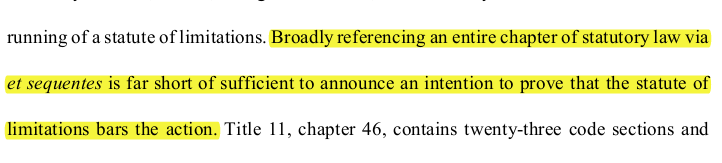
Practice Point – This opinion contains a helpful discussion of the exacting standard that applies when a plaintiff seeks to prove causation by circumstantial evidence:
McGee v. Comprehensive Radiology Services, PLLC, 2021-CA-00666-SCT (Civil – Torts/Conversion/Fraud) Affirming the chancellor’s finding that the president of a collections agency was individually and personally liable for $785,549.71 that she directed her company to delay remitting to a radiology group while also billing for and receiving commissions for collecting that money, holding that while the tort of conversion cannot be used to recover a mere debt it can be used to recover identifiable money belonging to the plaintiff which is what occurred here. (All justices concurred.)
Riverboat Corporation of Mississippi v. Davis,2020-IA-01244-SCT (Civil – Personal Injury/Negligence/Rule 60(b)) The circuit court granted summary judgment in favor the casino in a personal injury case stemming from a fall from a casino chair due to the lack of evidence that the casino breached a duty. The plaintiff then filed a motion to reopen the case under Rule 60(b)(1) alleging that the defendant committed fraud in its 30(b)(6) deposition based upon information the plaintiff discovered in an unrelated case about another chair at the casino. The circuit court granted the motion to reopen based on fraud and the defendant petitioned for interloc which the Supreme Court granted. On appeal, the Supreme Court held that the trial court abused its discretion because the plaintiff “fell far short of satisfying all of the elements of fraud” and because this case did not present the requisite “exceptional circumstances” for relief under Rule 60(b). (All justices concurred.)
Practice Point – This opinion has a helpful summary of what is required to prove fraud under Rule 60(b)(1):
Magee v. State, 2019-CT-01794-SCT (Civil – PCR/Involuntary Guilty Plea) Reversing the circuit court’s denial of the plaintiff’s pro se PCR motion, holding that the circuit court granted an evidentiary hearing but failed to address the issue of whether the plaintiff’s guilty plead was involuntary because the plaintiff was affirmatively misinformed about the possibility of early release by his trial attorney and failed to allow the plaintiff to call witnesses or present evidence. (Chief Justice Randolph did not participate.)
Meredith v. Clarksdale Democratic Executive Committee, 2021-EC-00305-SCT (Civil – Election Contest) Affirming the trial court’s decision agreeing with the CDEC’s decision that a mayoral candidate resided at a lake house outside of the city limits rather than a funeral home apartment within the city limits, holding that the would-be candidate failed to prove by “absolute proof” that he met the residency requirement on or before the applicable deadline. (Justice Coleman concurred in part and in the result) (“It is not in the court’s bailiwick to impose its judgment for that of the Legislature.”)
Other Orders
Hutto v. State, 2017-DR-01207-SCT (granting response to order granting motion for appointment of counsel for representation for successive petition for post-conviction relief filed by the Circuit Court of Hinds County)
Havard v. State, 2018-CA-01709-SCT (granting motion to file motion for attorney fees and expenses under seal)
Walker v. State, 2020-CT-00228-SCT (denying cert)
McLemore v. State, 2016-M-00364 (denying application for leave to proceed in the trial court with a warning against future frivolous filings)
A deposition took me out of blogging service for most of the afternoon, so a little later than usual I give you summaries of the nine opinions handed down by the Mississippi Court of Appeals. These opinions cover the statute of frauds, trusts, appellate jurisdiction, youth court, authentication of text messages, equitable division and alimony in a divorce case, workers’ comp, PCR, and more.
SEL Business Services, LLC v. Lord, 2021-CA-00368-COA (Civil – Real Property/Statute of Frauds) Affirming the chancery court’s dismissal of a suit to reclaim property or alternatively for unjust enrichment, holding that a “handshake deal” for the purchase of a building that was sold before that deal came to fruition was subject to the statute of frauds, that the statute of frauds was not satisfied, and that the equitable remedy of unjust enrichment was therefore unavailable. (All judges concurred.)
Lennon v. Lowrey & Fortner, P.A., 2021-CA-00426-COA (Civil – Wills, Trusts & Estates/Appellate Procedure/Appellate Jurisdiction) Granting a motion to dismiss an appeal for lack of jurisdiction in a case of first impression, holding that the 30-day time period for perfecting an appeal began to run upon the entry of an order adjudicating a claim for attorney’s fees against a trust–not the final judgment terminating the trust. (All judges concurred.)
Smith v. Adams County Youth Court, 2021-CP-00196-COA (Civil – Juvenile Justice) Dismissing an appeal of the denial of a minor’s post-disposition motion for modification arguing that his guilty plea was the result of ineffective assistance of counsel, holding that the notice of appeal was prematurely filed because the youth court had not been given an opportunity to consider these arguments and any supporting evidence. (Judge Wilson concurred in result only without separate written opinion.)
Warner v. Warner, 2020-CA-01098-COA (Civil – Domestic Relations/Divorce/Valuation/Equitable Division/Alimony/Contempt) Reversing the chancellor’s judgment in a divorce case, holding that the chancellor erred in valuation and equitable division of marital assets, in the award of alimony, and in finding the ex-husband in contempt and awarding attorney’s fees as a result. (Judge Wilson concurred in part and in the result without separate written opinion.)
Simpson v. State, 2021-KA-00075-COA (Civil – Felony/Authentication) Affirming convictions of two counts of first-degree murder, first-degree arson, and possession of a deadly weapon by a felon, holding that there was no plain error with regard to the authentication of text messages and that there was no merit to the claim of ineffective assistance for not objecting to the properly-authenticated text messages. (Judge Emfinger did not participate.)
Carson v. State, 2021-KA-00436-COA (Criminal – Felony/Weight and Sufficiency) Affirming conviction of possession of cocaine, holding that the circuit court did not err in denying a motion for new trial challenging the weight and sufficiency of the evidence and finding no merit to the defendant’s pro se arguments that his rights under the Fourth Amendment and the Confrontation Clause were violated, that the State’s case hinged on “racial profiling,” that he had ineffective assistance of counsel, and that the circuit judge failed to comply with Sharplin. (All judges concurred.)
Ellis v. State, 2020-CP-00770-COA (Civil – PCR) Affirming the circuit court’s denial of the plaintiff’s PCR motion, holding that the motion was time-barred and that the plaintiff failed to raise any claims resulting in the deprivation of his fundamental constitutional rights that would defeat the time bar. (Judge Wilson and Judge Emfinger concurred in part and in the result without separate written opinion. Judge McDonald concurred in the result only without separate written opinion.)
Reardon v. State, 2020-CP-01259-COA (Civil – PCR) Affirming the circuit court’s denial of the plaintiff’s PCR motion, holding that the motion was procedurally barred and that his claims of ineffective assistance of counsel, deprivation of fundamental rights, and failure to recuse were without merit. (Chief Judge Barnes and Judge Wilson concurred in part and in the result without separate written opinion. Judge McDonald concurred in the result only without separate written opinion. Judge Greenlee and Judge McCarty did not participate.)
Duren v. Effex Management Solutions, LLC, 2021-WC-00337-COA (Civil – Workers’ Compensation) Affirming the Commission’s ruling, holding that there was substantial evidence to support the Commission’s decision that the claimant failed to prove that he suffered a permanent disability and the decision to award TTD through the date of MMI, but denying post-MMI medical treatment, prescription, and mileage reimbursements. (Judge Wilson concurred in part and in the result without separate written opinion. Judge Westbrooks and Judge McDonald concurred in the result only without separate written opinion.)
DEEPER DIVE: This case had an interesting post-MMI fact pattern where the claimant was released to return to work without restrictions, was offered to return to work for the Employer at his pre-injury wages, and returned to work there, but then quit working for the Employer due to complaints of pain. Under these facts, the Court of Appeals noted that there was a presumption of no loss of wage-earning capacity and held that the claimant did not overcome it:
Other Orders
Hammer v. State, 2019-KA-01633-COA (denying rehearing) Shannon v. Shannon, 2020-CA-00847-COA (denying rehearing)
The Mississippi Supreme Court gave us one opinion today holding that an automobile is not a deadly weapon that is illegal to concealed-carry under section 97-37-1. Read on for context…
Altman v. State, 2021-IA-00419-SCT (Criminal – Felony/Youth Court/Jurisdiction/Concealed Carry?) Reversing the circuit court’s denial of the defendant’s motion to dismiss for lack of jurisdiction, holding that because an automobile cannot be “carried” or “concealed on or about one’s person,” the youth court has exclusive jurisdiction over a juvenile offender who commits a felony using an automobile. (All justices concurred).
CONTEXT – The youth court has exclusive original jurisdiction in all proceedings concerning a delinquent child, subject to some exceptions. One exception applies when a child commits a felony with a deadly weapon that is illegal, under section 97-37-1, to carry in a concealed manner. The defendant was seventeen when he allegedly drove his car intentionally into a car carrying his mother, siblings, and step father. The defendant was indicted for four counts of aggravated assault. He filed a motion to dismiss the indictment, arguing that the youth court had exclusive jurisdiction. The circuit court denied the motion. The Mississippi Supreme Court granted interlocutory appeal and reversed the circuit court, reasoning:
Other Orders
Godbolt v. State, 2020-DP-00440-SCT (denying pro se motion for the appointment of new counsel by defendant convicted of multiple counts of capital murder and sentenced to death stemming from a killing rampage in Lincoln County in 2017)
Arrington v. State, 2020-M-00571 (denying pro se application for leave to proceed in the trial court and restricting the petitioner from filing further such applications in forma pauperis)
Varner v. Anderson, 2021-M-01390-SCT (denying motion to reconsider order denying petition for interlocutory appeal and denying motion to dismiss said motion for reconsideration)