Mississippi Court of Appeals Decisions of August 30, 2022

The Mississippi Court of Appeals handed down eight opinions today. These decisions cover the MTCA, tax assessments, waiver of arbitration, a couple of criminal convictions, and a couple of PCR cases.


Belmer v. State, 2021-CP-00398-COA (Civil – Other)
Dismissing the plaintiff’s appeal from a decision of MDOC’s Administrative Remedy Program as moot because the plaintiff was released on parole during the pendency of the appeal and was not longer incarcerated.
(10-0)


Belmer v. State, 2021-CP-00410-COA (Civil – PCR)
Affirming the circuit court’s denial of the plaintiff’s PCR motion, holding that it was procedurally barred and without merit.
(10-0)

NOTE– Yes, the first two opinions dealt with the same plaintiff. No typo this time.


Simpson County School District v. Wigley, 2021-CA-00009-COA (Civil – Personal Injury)
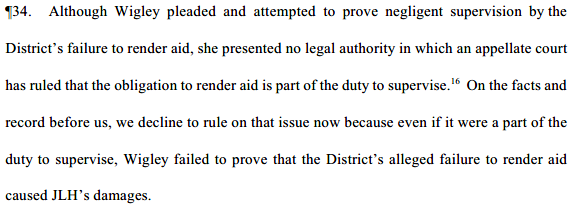
Reversing the circuit court’s judgment in an MTCA case against a school district alleging that the district failed to provide adequate supervision when children played tag while awaiting bus repairs, holding (1) that the plaintiff failed to provide sufficient evidence that the district proximately caused the injury that occurred during the course of what seems to have been a garden-variety game of tag and (2) that the plaintiff failed to prove that a failure to render aid caused the plaintiff’s damages
(6-3*: Judge Westbrooks concurred in part and dissented in part without separate written opinion; Judge Lawrence concurred in part and dissented in part, joined by Judge Westbrooks; Judge McCarty dissented, joined by Judge Carlton and in party by Judge Westbrooks and Judge Lawrence)

NOTE – The plaintiff argued that the district was liable for negligent supervision by failing to render timely and appropriate aid to the injured child, but the Court of Appeals noted the plaintiff presented no legal authority for such a duty and declined to rule on the issue of whether a duty existed since the causation element was lacking:


Wilson v. Lexington Manor Senior Care, LLC, 2021-CA-00072-COA (Civil – Contract)
Reversing the circuit court’s order compelling arbitration of a medical malpractice claim against a nursing home, holding that the nursing home waived arbitration by substantial invocation of litigation that included filing an answer with 38 defenses that did not include arbitration as a defense and filing a motion to dismiss and pursuing that motion to a ruling, all before filing a motion to compel arbitration.

NOTE – The nursing home argued that it did not find the arbitration agreement until after the motion to dismiss had been briefed and heard. But the Court of Appeals was not persuaded by this argument since the arbitration agreement had been in the nursing home’s possession the entire time.
(8-2-0: Judge Carlton and Judge Emfinger concurred in the result only)


McNair v. State, 2021-KA-01121-COA (Criminal – Felony)
Affirming conviction of aggravated domestic violence, holding that the evidence was sufficient to support the jury’s verdict and that the verdict was not against the overwhelming weight of the evidence.
(10-0)


Perkins v. State, 2021-KA-00129-COA (Civil – Felony)
Affirming conviction of sexual battery and sentence as a non-violent habitual offender after the defendant’s counsel filed a Lindsey brief, holding that the one-page pro se brief denying the crime and making argument after declining to testify at trial did not reveal any basis for reversal.
(9-0: Judge Emfinger did not participate)


BBM Ventures, LLC v. Frierson, 2021-CA-00248-COA (Civil – State Boards and Agencies)
Affirming the chancery court’s judgment affirming MDOR assessments for sales tax liability and for income tax liabilities, holding that the chancellor (1) did not err in ruling that the taxpayers had adequate notice and failed to appeal the sales tax assessment, (2) did not err in evaluating sales tax assessment that arguably did not account for personal use and donation of some inventory, (3) did not err in finding that the taxpayers failed to produce source documentation for the majority of their business expenses or affirming individual income-tax assessment, and (4) did not err in affirming the fraud penalty assessed in conjunction with one of the income-tax assessments.
(8-0: Judge Carlton and Judge McCarty did not participate)


Luckett v. State, 2021-CP-01248-COA (Civil – PCR)
Affirming the circuit court’s denial of a pro se PCR motion, holding that the plaintiff’s ineffective assistance of counsel and cumulative error claims lacked merit.
(9-0: Judge Emfinger did not participate)


Parker v. Ross, 2020-CA-01055-COA (denying motions for rehearing filed by five parties)

Finley v. PERS, 2021-SA-00089-COA (denying rehearing)

Smith v. Adams County Youth Court, 2021-CP-00196-COA (denying rehearing)

Pickle v. State, 2021-CP-00972-COA (denying rehearing)


Other Orders

Mississippi Court of Appeals Decisions of July 19, 2022

We are back in action! The Mississippi Court of Appeals handed down six opinions today after their summer break. These cover several appeals from criminal convictions, a termination of parental rights case, and an MTCA case with thorny statute of limitations computation, and PCR.


Bullock v. Mississippi Department of Child Protective Services, 2020-CA-00966-COA (Civil – Custody)
Affirming the judgment of the youth court terminating the plaintiff’s parental rights to her four children, holding that that the youth court’s decision based upon multiple, independently-sufficient statutory grounds was supported by clear and convincing evidence including evidence that one of the children had suffered severe physical, emotional, and mental abuse, and that this abuse of the one child was sufficient to support the termination of parental rights as to all four children. The Court of Appeals also held that there was no evidence that the GAL was unfair or biased.
(10-0)


Alvarado v. State, 2021-KA-00566-COA (Criminal – Felony/First-Degree Murder/Attempted First-Degree Murder)
Affirming conviction of first-degree murder and attempted first-degree murder, holding that the evidence of first-degree murder (that included surveillance footage of the defendant gunning down the victim in a gas station) and evidence of attempted first-degree murder (video showing the defendant exchanging gunfire with a second person after shooting the victim) was sufficient and that the verdict was not against the weight of the evidence.
(10-0)


Lopez v. State, 2021-CP-00331-COA (Civil – PCR)
Affirming the circuit court’s denial of the plaintiff’s motion for PCR, holding that the plaintiff’s guilty plead waived the alleged violation of his constitutional rights and that the plaintiff’s claims of ineffective assistance were waived and meritless.
(7-3-0: Judge Westbrooks concurred in part and in the result with separate written opinion, joined in part by Judge McDonald and Judge McCarty; Chief Judge Barnes concurred in result only without separate written opinion; Judge McDonald concurred in result only with separate written opinion, joined by Chief Judge Barnes.)


Keever v. The Board of Trustees for Mississippi Institutes of Higher Learning, 2021-SA-00036-COA (Civil – Personal Injury/MTCA/statute of limitations)
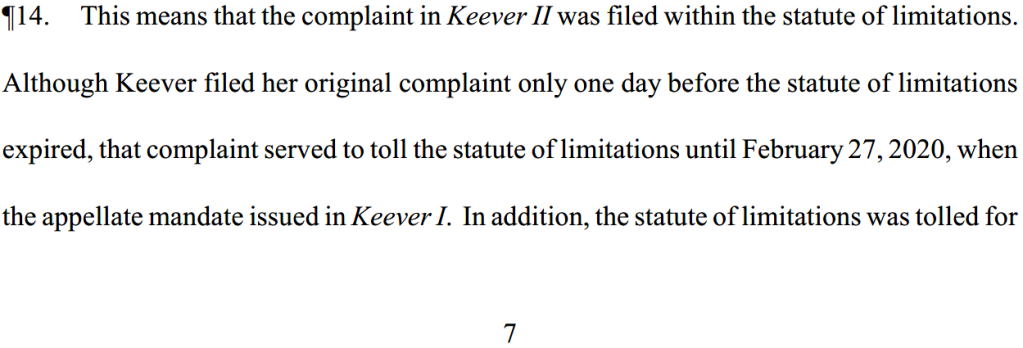
Reversing the circuit court’s dismissal of the complaint on statute of limitations grounds, holding that this, the plaintiff’s second lawsuit asserting an MTCA claim, was not barred by the statute of limitations because the statute of limitations was tolled during the pendency of the first lawsuit that was dismissed without prejudice (from the filing of the complaint to the issuance of the appellate mandate) and for another 95 days after a notice of claim for the second lawsuit was served. The Court of Appeals also held that a “stipulation of voluntary dismissal” of the first complaint after the defendants had filed answers was of no effect, that the complaint could not be dismissed based on the discretionary-function exemption, and that IHL is not entitled to a dismissal at this early stage.
(10-0)

Practice Point – Here is the timeline of key events, which my brain requires in order to process opinions like this:

  • March 8, 2013 – Alleged injury
  • March 3, 2014 – Plaintiff sent notice of claim
  • March 7, 2014 First Complaint filed (this complaint was dismissed by the circuit court for failure to comply with pre-suit requirements and the dismissal was appealed and affirmed by the MS Court of Appeals)
  • February 6, 2020 – MS Supreme Court denied cert
  • February 18, 2020 – Ineffective “Stipulation of Voluntary Dismissal” filed
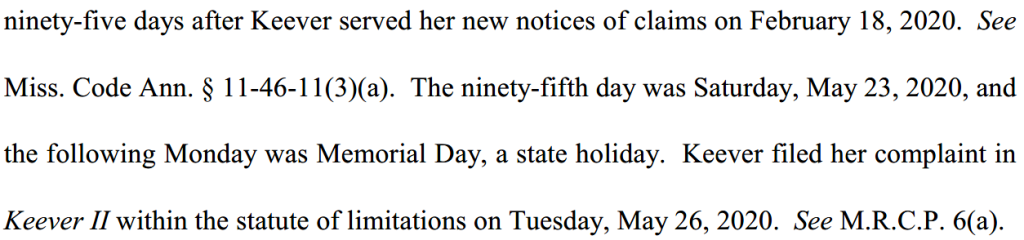
  • February 18, 2020 – Notice of claim letters sent (this tolled the statute, which was already being tolled during the pendency of the first lawsuit, another 95 days)
  • February 27, 2020 – Appellate mandate issued
  • May 26, 2020 – Second lawsuit filed on the last possible day

And what would stressful, statute of limitations computation party be without the last day falling on a Saturday, followed by a legal holiday?


Garlington v. State, 2020-KA-00392-COA (Criminal – Felony/Sexual Battery)
Affirming the conviction of one count of sexual battery against a minor, holding that the evidence was sufficient to support a finding that the elements of the crime were proven and to allow the jury to infer that the abuse occurred within the time frame stated in the indictment despite an alleged variance in the dates in the indictment and the proof at trial; there was no error in allowing the minor victim’s out-of-court statements under the tender years exception; no error in allowing the State to amend the indictment; no error in overruling the defendant’s Batson challenges; no error in failing to allow evidence of alleged sexual misconduct of the minor victim’s father; no Confrontation Clause violation by admitting lab results without a witness from the lab testifying at trial; no error in prohibiting Defendant’s expert from referring to certain materials that he had relied upon but had not produced to the State; no error in precluded testimony from Defendant’s would-be character witness; no Brady violation in allowing a rebuttal expert to testify; and there was no error in omitting the time frame of the abuse from the jury instructions setting forth the elements of the crime.
(7-3-0: Judge Wilson, Judge McCarty, and Judge Emfinger concurred in part and in the result without separate written opinion.)

NOTE – This is a 58-page, fact-intensive majority opinion.


Jenkins v. State, 2021-KA-00145-COA (Criminal – Felony)
Affirming conviction of trafficking at least 1kg of marijuana with intent to sell, holding that that was no Fourth Amendment violation in the circuit court’s denial of the defendant’s motion to suppress evidence obtained from search warrants for his house and vehicle or his motion and no error in denying the defendant’s motion to suppress his bank records even those records were improperly obtained via subpoena duces tecum.
(8-2-0: Judge Westbrooks concurred specially with separate written opinion, joined by Judge McDonald; Judge McDonald concurred in part and in the result without separate written opinion.)


Other Orders

Fluker v. State, 2021-CP-00162-COA (denying rehearing)


Hand Down List

Mississippi Supreme Court Decisions of June 30, 2022

The Mississippi Supreme Court handed down three opinions today: a case that resolved a fight over the Mississippi Division of Medicaid’s efforts to recoup overpayments to a senior care facility, an MTCA issue that wasn’t, and a post-conviction death penalty decision regarding a request to transfer DNA evidence.


Wilkinson County Senior Care, LLC v. Mississippi Division of Medicaid, 2020-SA-01332-SCT (Civil – State Boards and Agencies)
Affirming the chancery court’s order allowing the Mississippi Division of Medicaid to recoup a substantial overpayment made to a senior care facility for the years 2002-2003 that the DOM did not demand until 2011, holding that the delay did not bar DOM’s recover because (1) neither equitable estoppel nor any other legal or equitable principles barred the claim; (2) the decision was not arbitrary and capricious, clearly erroneous, or unsupported by substantial evidence; and (3) the delay did not violate the facility’s due process rights.
(9-0)


Strickland v. Rankin County School District, 2019-CT-01669-SCT (Civil – Personal Injury/MTCA/Negligence)
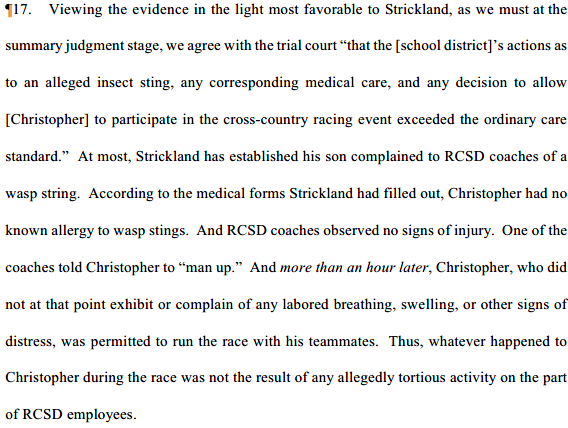
Affirming the trial court’s grant of summary judgment in favor of the school district, juking the question of whether the defendant was entitled to discretionary function immunity (that split the COA 5-5) and holding that the plaintiff had not established the basic element of negligence where the evidence provided by the plaintiff–a cross-country runner for the school–was stung by a wasp, was examined by at least one coach, was told to “man up” and run the race, began running, felt dizzy just after the mile marker, and fell and hit his head.
(5-1-2) (Justice Ishee concurred in result only, joined in part by Chief Justice Randolph. Justice Kitchens dissented, joined by Justice King. Justice Beam did not participate.)

NOTE – Here is a summary of the Court’s analysis of the element of breach:


Manning v. State, 2020-CA-01096-SCT (Civil – Death Penalty – Post Conviction)
Affirming the circuit court’s denial of a request to transfer DNA evidence to a different facility for additional DNA testing after the Court previously granted PCR to allow testing but six years of testing had allegedly yielded inconclusive results, holding that the circuit court had authority to decide the motion to transfer the evidence and that the circuit court did not abuse its discretion by denying the motion.
(7-2) (Justice King dissented, joined by Justice King)


Other Orders

Rules for Court Reporters, 89-R-99021-SCT (appointing Hon. Leslie D. King, Kati Vogt, Julie Mims, and Latanya Allen as members of the Board of Certified Court Reporters for two-year terms from July 1, 2022, through June 30, 2024)

Bolton v. John Lee, P.A., 2020-CA-00344-SCT (assigning appeal to Court of Appeals for a decision within 270 days of the entry of this order)

Doe v. Doe, 2020-CT-00853-SCT (denying cert)

Manhattan Nursing and Rehabilitation Center, LLC v. Barbara Hollinshed, 2020-CT-00882-SCT (denying cert)

Jiles v. State, 2021-CT-00034-SCT (denying cert)

The Mississippi Bar v. Mayers, 2021-BD-00268-SCT (suspending Urura W. Mayers from the practice of law pending final resolution of the petition for discipline filed by The Mississippi Bar)

Longo v. City of Waveland, Mississippi, 2021-CA-00735-SCT (consolidating two appeals)

Johnson v. State, 2022-M-00303 (denying reconsideration)


Hand Down List

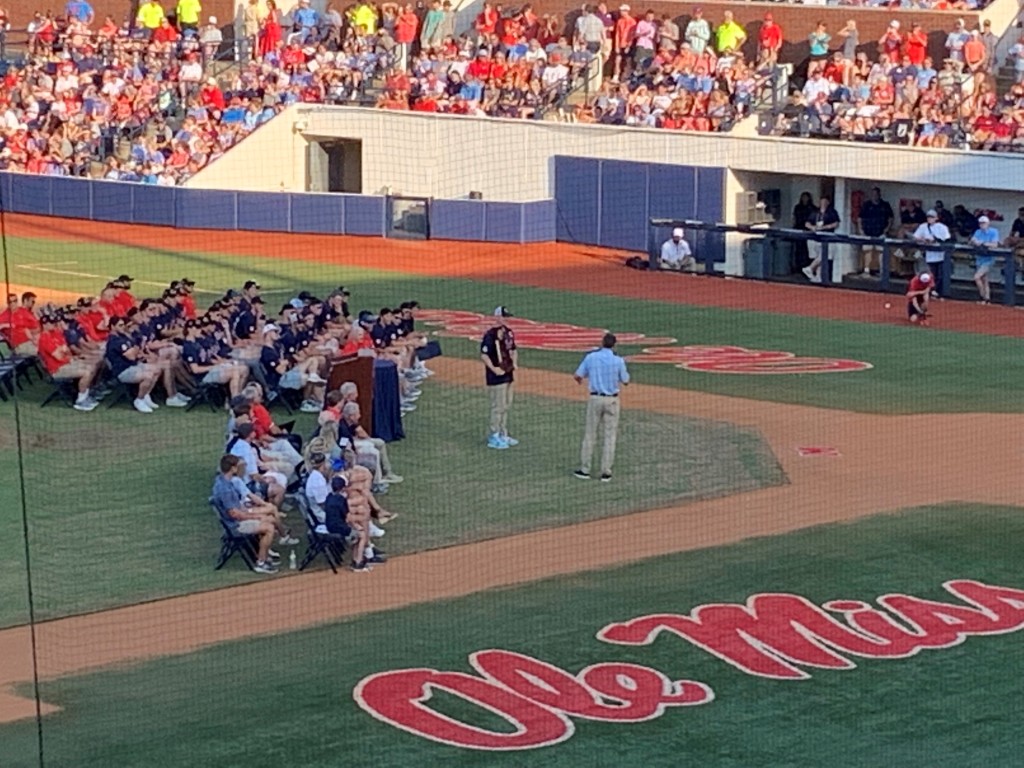
I try to keep things apolitical around here, but my two older boys and I went to Oxford yesterday and we can confirm that the Ole Miss Rebels did in fact win the 2022 College World Series. The boys obtained autographs from the gracious and patient Dylan DeLucia, Peyton Chatagnier, and Coach Bianco as evidence.

Mississippi Court of Appeals Decisions of June 28, 2022

The Mississippi Court of Appeals handed down eight opinions today covering a lot of territory without a single dissent. There is an appeal of summary judgment in a slip and fall case, the reversal of summary judgment in an MTCA case, a motion to compel arbitration case, two wills and estates cases, a criminal appeal, and a few PCR cases.


Siggers v. State, 2021-CP-00985-COA (Civil – PCR)
Affirming the circuit court’s dismissal of the plaintiff’s PCR motion, holding that though it was not a barred successive motion but that it lacked merit.
(10-0)


Daniels v. Family Dollar Stores of Mississippi, Inc., 2021-CA-00781-COA (Civil – Negligence/Premises Liability/Slip and Fall)
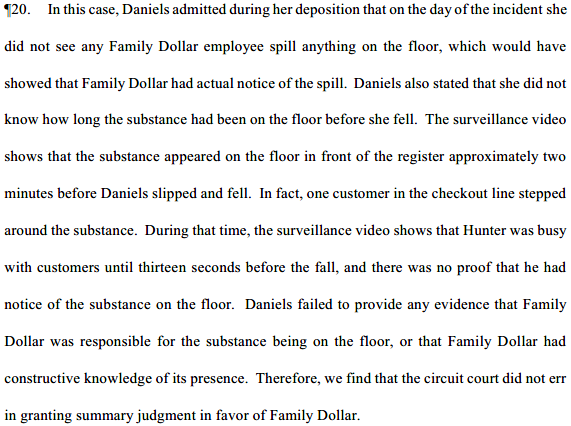
Affirming summary judgment in a premises liability case, holding that the circuit court did not err in granting summary judgment on the issue of breach where the plaintiff slipped in a puddle on the floor of a store but did not know how long it had been there and failed to prove that the store was responsible for the substance or had actual knowledge of the substance on the floor, or that the two minutes the substance had been on the floor gave the store constructive knowledge.
(10-0)

Practice Point – Here is the meat of the opinion’s reasoning on the constructive notice issue:


Towns v. Panola County Board of Supervisors, 2020-CA-01364-COA (Civil – Personal Injury/MTCA)
Reversing the circuit court’s finding that the County was entitled to “premises immunity” and “weather immunity” under the MTCA in a case where the plaintiff was injured when he drove into a culvert that had washed out, holding (1) that weather immunity did not apply because there was evidence that the County had knowledge that the culvert had deteriorated and thus weather was not the “sole” cause of the culvert washout and (2) that premises immunity did not apply because there was evidence that the condition on the premises was caused by the County.
(10-0) (Judge Emfinger concurred in part and in the result without separate written opinion)


Roberson v. State, 2020-CA-01208-COA (Civil – PCR)
Affirming the circuit court’s denial of the plaintiff’s PCR motion, holding that the decision was supported by substantial evidence and was not clearly erroneous.
(10-0) (Judge Westbrooks specially concurred, joined by Chief Judge Barnes, Judge McDonald, and joined by Judge McCarty in Part, urging more objective guidance for reevaluating recanted testimony.)


South Central Heating Inc. v. Clark Construction Inc., 2021-CA-00285-COA (Civil – Contract/Arbitration)
Affirming the circuit court’s order granting arbitration, holding that the moving party did not waive arbitration by including an alternative complaint for damages in the same pleading in which it moved to compel arbitration and stay the proceedings, applying for a default, responding to a motion for summary judgment filed on the arbitration issue, and responding to motion to file a third-party complaint.
(10-0) (Judge Westbrooks and Judge McDonald concurred in result only without separate written opinion.)

Practice Point – The Court of Appeals noted that at every turn the party seeking arbitration asserted and reserved the right to arbitration.

Additionally, if a party lets you off the mat on an entry of default after your answer to their motion to compel arbitration/complaint that they obtained after waiting six week, consider not fighting their motion to compel arbitration tooth-and-nail.


Taylor v. Tolbert, 2021-CA-00900-COA (Civil – Wills, Trusts, and Estates/Revocation by Destruction)
Affirming the chancery court’s application of the presumption of revocation by destruction, holding that the beneficiary under the will who petitioned to probate a copy of the will had not rebutted the presumption of revocation by destruction by clear and convincing evidence.
(10-0) (Judge Westbrooks concurred in result only without separate written opinion.)


McCarty v. State, 2021-KA-00418-COA (Criminal – Felony/Retroactive Joinder/Character Evidence)
Affirming convictions of aggravated assault, kidnapping, and rape, and conviction as a habitual offender to life imprisonment on each count to be served consecutively, holding that the defendant was not entitled to a new trial under the doctrine of retroactive joinder and that the defendant was not unfairly prejudiced by the admission of character evidence related to prior incidents with the victim. In response to arguments raised in the defendant’s supplemental pro se brief, the Court of Appeals held that the defendant was not due a new trial because of actual innocence, judicial misconduct, prosecutorial misconduct, or ineffective assistance.
(10-0)


Estate of Neill v. Earls, 2021-CA-00177-COA (Civil – Wills, Trusts, and Estates)
Reversing the chancellor’s order instructing the executor to revise an “executor’s deed” providing the for the transfer of the decedent’s property, holding that the language of the devise at issue was ambiguous and that the chancellor’s construction of the distribution was not supported by substantial evidence, and further holding that evidentiary record was insufficient to determine the intent of the testator so the case was remanded to allow the parties to provide additional extrinsic evidence of intent.
(9-0) (Judge Lawrence concurred in result only without separate written opinion. Chief Judge Barnes did not participate.)


Other Orders

Wall v. Wall, 2020-CA-01182-COA (denying rehearing)
Pujol v. State, 2022-TS-00024-COA (dismissing appeal as untimely for lack of appealable judgment)
Morgan v. State, 2022-TS-00298-COA (dismissing appeal as untimely for lack of appealable judgment)


Hand Down List

Mississippi Court of Appeals opinions of May 10, 2022

The Mississippi Court of Appeals set a new record since the launch of this blog by handing down fourteen opinions. After briefly contemplating a dash to the exit, I decided to slog through all of them so you don’t necessarily have to. Needless to say, there is something for everybody today!

(Apologies for the all-but-certain uptick in typos)


Fugler v. Bank of Brookhaven, 2021-CA-00303-COA (Civil – Personal Injury/Premises Liability)
Affirming summary judgment in favor of the defendant in a slip and fall case, holding that the plaintiff, who allegedly tripped on a floor mat but testified she did not see the mat before tripping, failed rebut the defendant’s summary judgment motion and supporting affidavit stating that the bank had no knowledge of prior incidents with its floor mats or any issues with the mat involved, that around 300 customers entered the bank daily and the bank was not aware of any prior mat-related trips or complaints, that the mat was heavy-duty commercial grade and was replaced annually to prevent wear, and that bank employees constantly monitored the floors.
(All judges concurred.)


Keys v. Military Department Gulfport, 2021-WC-00352-COA (Civil – Workers’ Comp)
Reversing the Commission’s finding that the Employer/Carrier was entitled to a credit for indemnity payments that the claimant received but assigned back to the employer during the time the claimant was receiving paid sick leave, holding that since the claimant was awarded permanent total disability benefits, section 25-3-95(2)(b) (prohibiting a state employee from using accrued personal and/or medical leave and receiving workers’ comp to earn more than 100% of his state-employment wages) did not apply.
(Judge Wilson specially concurred, joined in part by Judge McCarty.)

NOTE – I think Judge Wilson’s special concurrence provides a clearer path forward in workers’ comp cases: Regardless of whether the indemnity benefits during the time in question were classified as TTD or PTD, the claimant was entitled to a total of 450 weeks of indemnity benefits (however classified) and since the claimant did not receive any indemnity benefits during the period he was assigning benefits back to the Employer, the Employer/Carrier were not entitled to a credit for those weeks.


Smith v. State, 2021-CP-00099-COA (Civil – PCR)
Affirming the circuit court’s denial of a pro se plaintiff’s PCR petition, holding that the plaintiff presented no evidence to show a reasonable ground for the trial court to believe he was incompetent to plead guilty.
(All judges concurred.)


Prystupa v. Rankin County Board of Supervisors, 2020-CA-01049-COA (Civil – MTCA/Statute of Limitations/Latent Injury)
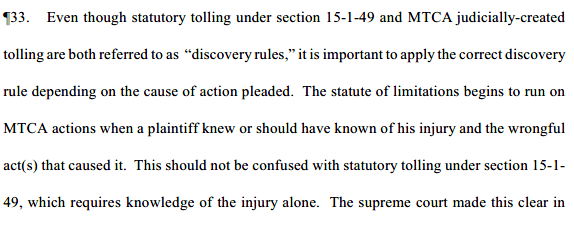
Affirming the dismissal of a flooding damage MTCA claim based on the running of the statute of limitations, holding that this claim was an MTCA negligence claim subject to a one-year statute of limitations that began to run when the plaintiff knew or should have known of both the injury and its probable cause. In this case, the Court of Appeals held that the statute of limitations began to run when the plaintiff knew of the flooding (the injury) and knew it was due to a blocked drain (the cause) as opposed to when he found out that crushed pipe caused the blocked drain (i.e. caused the cause). The Court of Appeals also affirmed the circuit court’s denial of the plaintiff’s Rule 59(e) motion to aleter or amend based on fraudulent concealment and the circuit court’s denial of the plaintiff’s motion for leave to amend his complaint to add claims of nuisance and trespass.
(Judge McCarty concurred in part and in the result without separate written opinion. Judge Emfinger did not participate.)

TAKE HEED, lest you fall victim to the distinction between “statutory tolling” and “MTCA tolling”:


Schmidt v. Schmidt, 2020-CA-01253-COA (Civil – Custody)
Affirming the chancellor’s decision granting sole physical custody to the mother, holding that there was no error in finding that the deterioration of the parties’ ability to co-parent constituted a material change in circumstances entitling the mother to sole physical custody and no error in the application of the Albright factors.
(Judge Wilson concurred in part and in the result without separate written opinion.)


Smith v. Mississippi Department of Public Safety, 2021-SA-00020-COA (Civil – State Boards and Agencies)
Affirming the circuit court’s judgment affirming the Mississippi Employee Appeals Board’s decision upholding the claimant’s termination, holding that the claimant’s procedural due process rights were not violated because he was provided notice of the charges and an opportunity to be heard, that his substantive due process rights and rights under the MS State Personnel Board rules were not violated because the MEAB’s decision was supported by substantial evidence and was not arbitrary, and that the claim that the claimant was terminated because of communications with his wife and that the MEAB’s decision was based on uncorroborated hearsay was without merit.
(All judges concurred.)


McIntosh Transport, LLC v. Love’s Travel Stop & Country Stores, Inc., 2021-CA-00154-COA (Civil – Contract/Arbitration)
Reversing the circuit court’s order granting the defendants’ motion to compel arbitration, holding that the contract containing the contract was not binding on the plaintiff because it was signed by a 19-year-old who signed his grandfather’s name and whose only authority was the actual authority to retrieve the truck following repairs that did not include the authority to bind the company to arbitration.
(Chief Judge Barnes concurred in part and in the result without separate written opinion. Judge Carlton concurred in the result only without separate written opinion.)


Case v. Case, 2020-CA-01047-COA (Civil – Custody/Equitable Distribution of Marital Property/Albright Factors/Ferguson Factors)
Affirming the chancellor’s decision on child custody, but reversing the chancellor’s decision on the equitable distribution of marital property. Regarding custody, the Court of Appeals held that the chancellor’s application of the Albright factors was supported by substantial evidence. Regarding equitable distribution, the Court of Appeals affirmed all of the chancellor’s findings except his valuation of the marital property which it reversed and rendered due to a calculation error.
(Judge Wilson and Judge Westbrooks concur in part and in the result without separate written opinion.)

MY TAKE – Few, if any, of us are in the legal field because of a proclivity for math yet it still haunts us all.


Wadley v. Hubbs, 2021-CA-00866-COA (Civil – Real Property/Notice of Appeal)
Reversing the circuit court’s dismissal of the plaintiff’s appeal from a county court judgment as untimely, holding that the plaintiff’s notice of appeal that was stamped “Filed” after the county court’s judgment but before disposition of the plaintiff’s motion to set aside the judgment was effective and timely even though the header of the notice said “IN THE COUNTY COURT” because the body of the notice made it clear the plaintiff was appealing to the circuit court and the notice was stamped “Filed” by the circuit clerk.
(All judges concurred.)


Murray v. State, 2021-KA-00264-COA (Criminal – Felony/Hearsay/Rule 412)
Affirming conviction of statutory rape, holding that the circuit court erred in allowing the victim’s mother’s to testify about a neighbor’s out-of-court statement, but that it was harmless and “essentially cumulative evidence of non-criminal activity that [the defendant] admitted.” The Court of Appeals also held that the circuit court did not err in denying the defendant’s ore tenus request to compel the victim’s counseling records because even though a determination of whether the records were privileged could not be made until the records were examined, the defendant did not comply with Rule 412 of the Mississippi Rules of Evidence. The Court of Appeals also held that the plaintiff’s claims of ineffective assistance of counsel for failure to request an alibi instruction, failure to object to hearsay, failure to request a limiting instruction regarding the hearsay testimony, and failure to make a timely request for the victim’s counseling records did not entitled him to relief on this appeal.
(All judges concurred.)


Bailey v. State, 2021-KA-00281-COA (Criminal – Felony/Lindsey Brief)
Affirming conviction of fondling of a six-year-old and sentence to life imprisonment as a violent habitual offender, noting that the defendant’s appointed appellate counsel filed a Lindsey brief and holding that the defendant’s pro se brief arguing that the trial court lacked jurisdiction and that his indictment was not marked “filed” was factually mistaken and without merit.
(Judge Smith did not participate.)


Finley v. PERS, 2021-SA-00089-COA (Civil – State Boards and Agencies/PERS/Disability)
Reversing the circuit court’s judgment affirming PERS Medical Board’s denial of the plaintiff’s claim for non-duty-related disability retirement benefits, holding that PERS’s assessment of the plaintiff’s job requirements and ability to perform her job was arbitrary and capricious. The case was remanded for PERS to determine if the plaintiff could perform the true duties of registrar with her disability and the support staff, if any, she had at the time.
(Judge Wilson concurred in part and in result without separate written opinion.)


Boyd v. MDOC, 2021-CC-00459-COA (Civil – State Boards and Agencies/MDOC)
Affirming the MDOC’s disciplinary actions against the plaintiff whose oversight led to MDOC’s failure to issue an arrest warrant for a probationer who did not report to his assigned probation office upon release from MDOC custody who then killed two Brookhaven police officers in the line of duty, holding that the plaintiff failed to meet her burdens of proof and persuasion to overcome the presumption of correctness due MDOC’s decision.
(All judges concurred.)


Parker v. Ross, 2020-CA-01055-COA (Civil – Wills, Trusts, and Estates)
Affirming in part and reversing in part the chancery court’s grant of summary judgment in a claim alleging mismanagement of a trust and to recover real property that was allegedly improperly sold. The Court of Appeals affirmed the chancellor’s judgment in part, holding that any claims governed by the three-year statute of limitations were time-barred. The Court of Appeals also reversed the chancellor’s judgment in part, holding that the allegations related to the mismanagement of the trust were subject to a ten-year statute of limitations and that one of the plaintiffs had created a genuine issue of material fact as to his unsoundness of mind and remanded this matter to the chancery court for further proceedings.
(Judge Emfinger dissented, joined by Judge Wilson and Judge Greenlee and joined in part by Judge McDonald.)


Other Orders

Lawrence v. State, 2021-TS-1324-COA (providing, on the court’s own motion, the appellant and his attorney, Wayne Dowdy, one final opportunity to show cause why this appeal should not be dismissed as untimely)


Phew…

Mississippi Court of Appeals decisions of May 3, 2022

There is no peddling of leaked drafts on this blog, folks. Just genuine, final opinions from the Mississippi Court of Appeals and Mississippi Supreme Court, locally sourced and responsibly harvested from the Court’s official hand down page. Today, we have eight opinions from the Mississippi Court of Appeals including several criminal cases (one involving the admissibility of social media messages), an auto liability/road construction case with another MTCA-related hybrid bench/jury trial, a will contest, and PERS disability case.


Simmons v. Jackson County, Mississippi, 2020-CA-01014-COA (Civil – Wrongful Death/MTCA/Auto Liability/Hybrid Trial)
Affirming circuit court’s ruling that the county bore no responsibility for a driver’s fatal accident that occurred when his vehicle left the road and struck a culvert, holding that there was sufficient evidence to support the circuit court’s finding that the driver’s negligence in failing to exercise vigilant caution as he drove through a work zone was the sole proximate cause of the accident.
(Judge Westbrooks dissented, joined by Judge Carlton and Judge McDonald.)

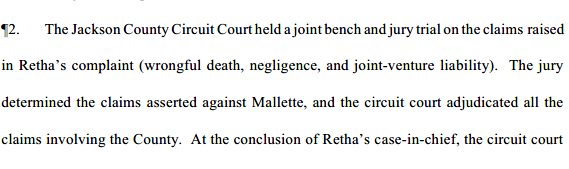
NOTE – This was another was with an MTCA defendant and a non-MTCA defendant. In addition to the county, the plaintiff sued Mallette, a construction company that had repaved the road prior to the acccident. The trial court held a hybrid jury/bench trial:

At the conclusion of the plaintiff’s case-in-chief, the circuit involuntarily dismissed the joint venture claim against the County and Mallette. At the conclusion of the trial, the jury returned a verdict in favor of Mallette. The circuit court then entered findings of fact and conclusions of law concluding that the county created a dangerous condition but that the driver’s negligence was the sole proximate cause of the accident and therefore held that the county was not liable.


Dyer v. State, 2021-KA-00016-COA (Criminal – Felony/Sexual Battery)
Affirming conviction of sexual battery of a teenage girl, noting that the defendant’s appointed counsel had filed a Lindsey brief, the defendant had not filed his own brief, and that the Court’s review of the record yielded no arguable issues of appeal.
(All judges concurred.)


Smith v. Public Employees Retirement System of Mississippi, 2021-SA-00051-COA (Civil – State Boards and Agencies/PERS)
Affirming denial of a correctional offer’s application for duty-related benefits, holding that the PERS decision was not clearly erroneous, contrary to law and not supported by substantial evidence.
(All judges concurred.)


Wofford v. State, 2020-KA-01341-COA (Criminal – Felony/Burglary/Accomplice Liability)
Affirming convictions of and sentences for two counts of burglary of a dwelling, holding that the circuit court did not err when it denied the defendant’s motion for directed verdict, his request for a peremptory instruction, or his motion for JNOV arguing that he could not be convicted of burglary because there was no evidence that he had broken, entered, or stolen, because the Court reasoned the defendant was indicated for burglary as a principal based on his actions as an accessory before the fact; the circuit court did not err in giving an accomplice-liability instruction; and the circuit court did not err in granting the State’s motion in limine excluding testimony about the amount of money that was taken in the burglary.
(Judge McDonald concurred in result only without separate written opinion. Judge Smith did not participate.)


Adams v. State, 2020-KA-01383-COA (Criminal – Felony/Armed Robbery/Indictment)
Affirming conviction of armed robbery, holding that the jury’s verdict was not against the overwhelming weight of the evidence; that the circuit court did not err by not sua sponte preventing a former associate of the defendant from testifying that he had pleaded guilty to the armed robbery in question in response to a question that was not objected to; that the circuit court did not err by allowing the defendant’s former associate’s recorded interview to be played at trial; that although the State’s attempts to amend the indictment were ineffective because the State failed to procure a written order allowing the indictment, the original indictment was not fatally defective; and that the defendant was not entitled to a new trial under the cumulative error doctrine.
(Judge Westbrooks concurred in result only without separate written opinion.)


Smart v. State, 2020-KA-00835-COA (Criminal – Felony/Exploitation of a Child/Social Media)
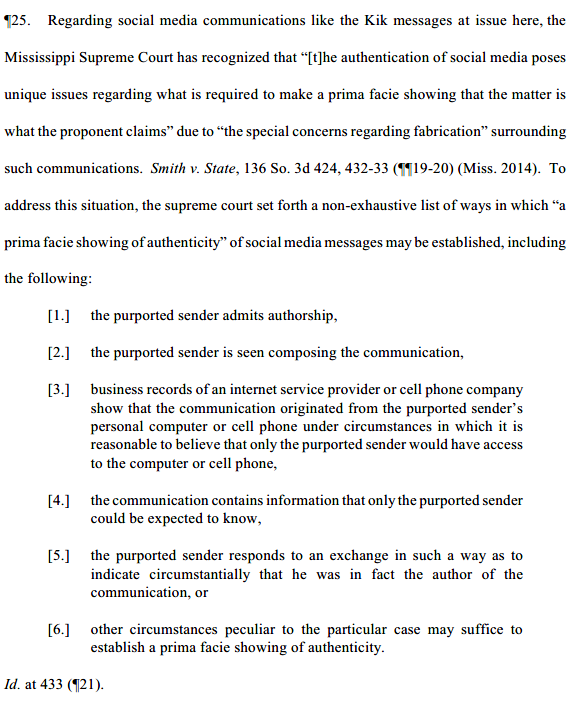
Affirming conviction of exploitation of a child and a twenty-year sentence, holding that there was no error in the admission of Kik messages because they had been sufficiently authenticated and that there was no prosecutorial misconduct in stating that the Kik messages were from the defendant and correlated with a printout of the defendant’s phone records.
(Judge Wilson concurred in part and in the result without separate written opinion.)

Practice Point – If you need to get social media communications admitted (or if you are trying to keep them out) here is the Mississippi Supreme Court’s guidance, as stated by the Court of Appeals in this opinion:


Briggs v. State, 2020-KM-01350-COA (Criminal – Misdemeanor)
Affirming conviction of driving under the influence of marijuana and simple possession of marijuana in a motor vehicle, holding that the evidence was sufficient to support his conviction and that the conviction was not against the overwhelming weight of the evidence.

NOTE – The defendant argued that the State failed to prove he was “influenced” by the marijuana because the State Trooper testified that he never saw the defendant operate the vehicle except to pull the vehicle to the side of the road. The unimpressed Court noted that the State does not have the burden of proving impaired driving, and that the Trooper’s testimony that he smelled strong marijuana odor from the vehicle and observed the defendant’s watery and bloodshot eyes was sufficient.


Dunn v. Hart, 2020-CA-01229-COA (Civil – Wills, Trusts, and Estates)
Affirming the chancery court’s findings that the testator/mother had mental capacity to execute a 2015 will but that one of her children (who happened to be the recipient of the mother’s entire estate in the will) failed to rebut the presumption of undue influence by clear and convincing evidence.

NOTE – This is a fact-bound opinion and I do not think any summary I could write of the facts would be particularly helpful, and it would certainly not be a substitute for reading this opinion if it applies to your practice.


Other Orders

Manhattan Nursing and Rehabilitation Center, LLC v. Hollinshed, 2020-CA-00882-COA (denying rehearing)


Hand Down Page

Mississippi Supreme Court decisions of April 28, 2022

After some sort of technical hiccup with the State’s web domain that knocked the Mississippi Supreme Court’s website offline for a spell, they are back in business. The Court handed down one hearty opinion in a wrongful death case that involves § 1983, qualified immunity, the MTCA, the appealability of summary judgment denials, and hearsay.


City of Jackson v. Johnson, 2020-CA-00318-SCT (Civil – Tort/Wrongful Death/1983/MTCA)
Reversing and rendering a jury verdict holding the City liable under § 1983 and affirming the trial court’s judgment finding the City liable under the MTCA for the decedent’s wrongful death. The victim was murdered shortly after calling 911 to report a prowler. The dispatcher did not tell the victim to remain on the line, in violation of the City’s policies and procedure. Two JPD officers went to the victim’s house, did not detect that the prowler had entered a window, did not make contact with the victim, and left. The victim was found dead the next day. The victim’s family filed suit under § 1983 and under the MTCA.

The 911 operator and officers got out via qualified immunity on summary judgment. The § 1983 case was tried by a jury and the MTCA case was tried “simultaneously” before the bench. The jury found that the City violated the victim’s constitutional rights to due process and awarded $1M in damages. The trial court awarded $500,000 (i.e. the statutory maximum) under the MTCA.

On appeal, the Mississippi Supreme Court held that the City was entitled to a directed verdict on the § 1983 claim, reasoning that our constitutional due process rights do not include the right to be protected by the state from acts of private violence. Regarding the MTCA claim, the Supreme Court held that the 911 dispatcher’s conduct in responding to the victim’s call did not involve an element of choice or judgment and the City was therefore not protected by discretionary function immunity from liability under the MTCA.

There was a hearsay issue involving the defendant’s statement contained in the police report that warrants a brief discussion. The trial court admitted the police report, but with the assailant’s statement to police redacted, finding that the assailant could not be compelled to testify against himself and that hearsay exception in Rule 804(b)(3) did not apply because the statement was not being used against the assailant/declarant. Later in the trial, the court allowed the plaintiff’s expert to reply on the assailant’s statement in forming his opinions over the City’s objection that the expert had relied on inadmissible hearsay. The Mississippi Supreme Court did not have to address the argument that the expert’s testimony was a “conduit for otherwise inadmissible hearsay” because it held that that the assailant’s statement to police was admissible under the Rule 804(b)(3) exception after all, so there was no error in admitting the expert testimony that relied upon it.

(Chief Justice Randolph wrote a special concurrence, joined in part by Justice Maxwell, Justice Chamberlin, Justice Ishee, and Justice Griffis. Justice Griffis also wrote a special concurrence.)

Practice Point – I found it remarkable that the Mississippi Supreme Court heretofore had not addressed the issue of whether the denial of a motion for summary judgment can be appealed after a trial. They did here, and now we know:

One More Thing – We were this close (maybe) to the Mississippi Supreme Court addressing one of my pet issues: When a case involves an MTCA defendant and a non-MTCA defendant how, exactly, should a hybrid bench/jury trial proceed?


Other Orders

Hutto v. State, 2017-DR-01207-SCT (granting the plaintiff’s Motion for Leave to File Rebuttal to Opposition to Motion for Appointment of Counsel for Representation for Successive Petition for Post-Conviction Relief and the State’s Motion for Leave to File Surrebuttal in Opposition to Motion for Appointment of Counsel for Representation for Successive Petition for Post-Conviction Relief)

Randle v. Randle, 2020-CT-0033-SCT (granting cert)

McPhail v. McPhail, 2020-CA-00739-SCT (denying Motion Pursuant to Rule 8 and Rule 27 of the Rules of Appellate Procedure is hereby denied and remanding to the chancery court of Grenada County for an adjudication of a request for release on bond pending appeal in light of his child support payment subsequent to the February 24, 2022 denial of his prior motion)

HL&C Marion, LLC v. DIMA Homes, Inc., 2020-CT-00750-SCT (CORRECTION: granting cert 6-0)

Williams v. State, 2020-KA-772-SCT (denying rehearing)

Morningstar v. Perkins Law Firm, 2020-CT-1203-SCT (denying cert)

Embrey v. Young, 2021-CT-91-SCT (denying cert)


Hand Down Page

Summaries of the Mississippi Court of Appeals opinions of March 29, 2022

The Court of Appeals handed down one opinion today that is part MTCA decision on the open and obvious defense and part cautionary tale about the hazards of, and interplay among, Rules 54(b), 59(b), and 60(b) of the Mississippi Rules of Civil Procedure and Rule 3 of the Mississippi Rules of Appellate Procedure. Since I just had one opinion to wrestle with today I took a deeper dive into the timeline and the motions filed at the trial court level.


McGee v. Neel Schaffer Engineers and Planners Inc., 2020-CA-01277-COA (Civil – Wrongful Death)
Affirming in part the circuit court’s order granting summary judgment as to some defendants and dismissing the appeal as to the other defendants. The plaintiff’s decedent died of electrocution while moving a water pump on a State-aid culvert reinforcement project due a conflict with a utility line. The plaintiff filed suit against Pike County, Toles (the County’s State-aid engineer), Neel Schaffer (the engineer’s employer), and others not relevant to this appeal. The timeline is key to unpacking this opinion:

  • July 27, 2018: Summary judgment granted to Neel Schaffer’s because Toles was acting as a county employee and immune under the MTCA and that as a corollary Neel Schaffer, as Toles’s employer, was entitled to MTCA immunity. Final judgment entered as to the claims against Neel Schaffer using the magic words of Rule 54(b) (i.e. “final judgment” and “no just reason for delay”).
  • August 1, 2019: Summary judgment granted in favor of Toles on the claims against him in his individual capacity because it had previously determined Toles was entitled to MTCA immunity. Final judgment entered as to these claims.
  • June 18, 2020: The plaintiff filed a “motion to reconsider” the July 27, 2018, and August 1, 2019, summary judgments.
  • September 21, 2020: Plaintiff’s motion to reconsider was properly treated as a Rule 60(b) motion rather than a Rule 59(b) motion because it was filed more than ten days after the judgments had been entered, found to be untimely and meritless under Rule 60(b), and therefore denied.
  • October 28, 2020: Summary judgment granted as to the claims against Pike County and Toles in his official capacity, finding that they were entitled to immunity under the MTCA.
  • November 17, 2020: The plaintiff appealed from the summary judgments of July 27, 2018; August 1, 2019; and October 28, 2020, but not the September 21, 2020 denial of the motion to reconsider.
  • November 24, 2020: Neel Schaffer and Toles in his individual capacity filed a motion to dismiss the appeal as untimely.
  • November 25, 2020: The circuit court entered a final judgment as to the claims against Pike County and Toles in his official capacity.
  • December 4, 2020: Plaintiff filed an amended notice of appeal, again appealing only the summary judgments.
  • December 8, 2020: Neel Schaffer and Toles filed a second joint motion to dismiss the appeal as untimely.

The Court of Appeals first addressed the July 27, 2018, and the August 1, 2019, final judgments, and held that because the plaintiff did not file a motion to reconsider within ten days of either judgment or a notice of appeal within thirty days of either judgment, the plaintiff’s appeal of those judgments was untimely.

The Court of Appeals then addressed the dismissal of the claims against Pike County and Toles, holding that the circuit court did not err in finding that the dangerous condition was open and obvious, was not created by the government’s negligent maintenance or repair and it, and was not caused by Toles. The Court noted that the issue of whether a danger is open and obvious is usually a question for the trier of fact, but that there are cases where conditions are so clearly dangerous that the issue can be decided as a matter of law. The Court also held that neither Pike County nor Toles could be liable for causing a dangerous condition created by a third-party without notice and sufficient time to correct the dangerous condition:

(All judges concurred)

PRACTICE POINT: If you win summary judgment as to fewer than all claims/parties, request a 54(b) final judgment like the defendants did here. If the other side wins summary judgment as to fewer than all claims/parties, beware of a 54(b) final judgment that starts your appeal shot clock.


Other Orders

Wilson v. State, 2020-CP-00762-COA (denying motion for rehearing)
Hardin v. Hardin, 2020-CA-1314-COA (denying appellee’s motion for appellate attorney’s fees)
Jiles v. State, 2021-CP-34-COA (denying motion for rehearing)


Hand Down List

Summaries of the Mississippi Court of Appeals opinions of March 15, 2022

The Mississippi Court of Appeals handed down six opinions today with a little something for everybody. There are two real-property decisions, two PCR denials, one criminal conviction affirmed, and an MTCA/12(b)(6) decision.


DeSoto County v. Vinson,  2021-CA-00122-COA (Civil – Real Property/Division of Subdivision Lot)
Affirming the circuit court’s decision reversing a DeSoto County Board of Supervisors decision regarding the division of a subdivision lot into two separate residential lots, holding that the circuit court did not err in ruling that the properly owner should resubmit an application to divide property with written approval of “adversely affected” and “directly interested” parties or proceed under section 19-27-31 in chancery court.
(All judges concurred)


Land v. Land, 2021-CA-00402-COA (Civil – Real Property/Partition of Property)
Affirming the chancellor’s denial of complaint for partition, holding that chancellor did not err in ruling that the residential property claimed as homestead property by one party could only be partitioned by written agreement of the parties and could not be involuntarily partitioned by chancery court decree.
(All judges concurred)


Bridges v. State, 2020-CA-00816-COA (Civil – PCR)
Affirming the circuit court’s denial of a motion for post-conviction relief, holding that the circuit court did not err in finding that there was insufficient evidence to prove that the second PCR motion satisfied a statutory exemption to procedural bars and that the evidence did not show good cause for failing to provide additional affidavits.
(Judge Westbrooks concurred in part and in result, joined by Judge McDonald and Judge Lawrence, and joined in part by Judge McCarty)


Jackson v. State, 2021-KA-00292-COA (Criminal – Felony)
Affirming conviction of sexual battery and filming a minor engaging in sexually explicit conduct and a sentence to serve consecutive terms of thirty years and forty years, holding that there were no arguable issues for appeal based upon a Lindsey brief and the Court’s independent review of the record.
(All judges concurred)


Horton v. State, 2021-CP-00383-COA (Civil – PCR)
Affirming the circuit court’s denial of a PCR motion, holding that the circuit court did not err in ruling that the sentence was not unconstitutional and that his confession was voluntary.
(All judges concurred)


J.D. v. McComb School District, 2020-CA-00022-COA (Civil – Personal injury/Civil Procedure/12(b)(6))
Reversing the circuit court’s ruling granting the defendant’s motion to dismiss for failure to state a claim upon which relief can be granted, holding that the plaintiff’s allegations that a minor was attacked at school and that the school district had knowledge of similar conduct by the attacker and breached its ministerial duty to use ordinary care and to take reasonable steps to minimize foreseeable risk to the plaintiff.
(Judge Smith dissented, joined by Judge Greenlee and Judge Lawrence and joined in part by Judge Emfinger)

Practice Point: In footnote 6, the majority opinion addressed and rejected the dissent’s argument that the plaintiff should have included additional details regarding the alleged prior conduct of the attacker, summarizing the liberal pleading requirements of Rule 8:


Other Orders

None


Hand Down List Page