Mississippi Supreme Court decisions of April 28, 2022

After some sort of technical hiccup with the State’s web domain that knocked the Mississippi Supreme Court’s website offline for a spell, they are back in business. The Court handed down one hearty opinion in a wrongful death case that involves § 1983, qualified immunity, the MTCA, the appealability of summary judgment denials, and hearsay.


City of Jackson v. Johnson, 2020-CA-00318-SCT (Civil – Tort/Wrongful Death/1983/MTCA)
Reversing and rendering a jury verdict holding the City liable under § 1983 and affirming the trial court’s judgment finding the City liable under the MTCA for the decedent’s wrongful death. The victim was murdered shortly after calling 911 to report a prowler. The dispatcher did not tell the victim to remain on the line, in violation of the City’s policies and procedure. Two JPD officers went to the victim’s house, did not detect that the prowler had entered a window, did not make contact with the victim, and left. The victim was found dead the next day. The victim’s family filed suit under § 1983 and under the MTCA.

The 911 operator and officers got out via qualified immunity on summary judgment. The § 1983 case was tried by a jury and the MTCA case was tried “simultaneously” before the bench. The jury found that the City violated the victim’s constitutional rights to due process and awarded $1M in damages. The trial court awarded $500,000 (i.e. the statutory maximum) under the MTCA.

On appeal, the Mississippi Supreme Court held that the City was entitled to a directed verdict on the § 1983 claim, reasoning that our constitutional due process rights do not include the right to be protected by the state from acts of private violence. Regarding the MTCA claim, the Supreme Court held that the 911 dispatcher’s conduct in responding to the victim’s call did not involve an element of choice or judgment and the City was therefore not protected by discretionary function immunity from liability under the MTCA.

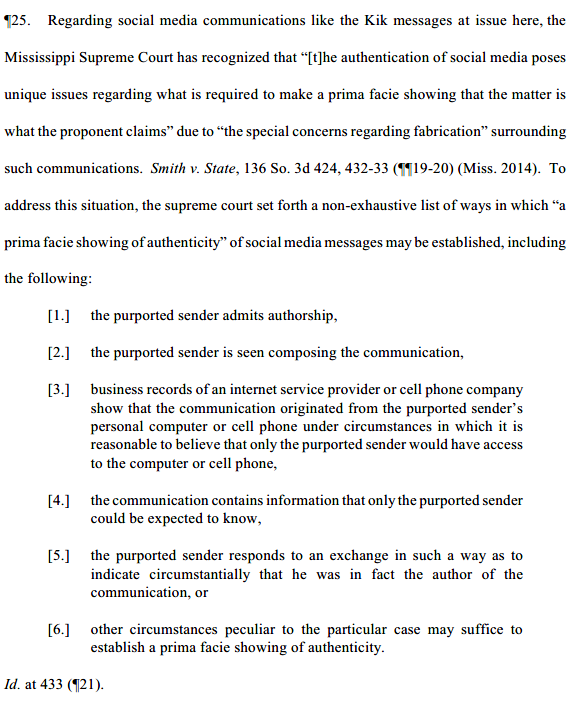
There was a hearsay issue involving the defendant’s statement contained in the police report that warrants a brief discussion. The trial court admitted the police report, but with the assailant’s statement to police redacted, finding that the assailant could not be compelled to testify against himself and that hearsay exception in Rule 804(b)(3) did not apply because the statement was not being used against the assailant/declarant. Later in the trial, the court allowed the plaintiff’s expert to reply on the assailant’s statement in forming his opinions over the City’s objection that the expert had relied on inadmissible hearsay. The Mississippi Supreme Court did not have to address the argument that the expert’s testimony was a “conduit for otherwise inadmissible hearsay” because it held that that the assailant’s statement to police was admissible under the Rule 804(b)(3) exception after all, so there was no error in admitting the expert testimony that relied upon it.

(Chief Justice Randolph wrote a special concurrence, joined in part by Justice Maxwell, Justice Chamberlin, Justice Ishee, and Justice Griffis. Justice Griffis also wrote a special concurrence.)

Practice Point – I found it remarkable that the Mississippi Supreme Court heretofore had not addressed the issue of whether the denial of a motion for summary judgment can be appealed after a trial. They did here, and now we know:

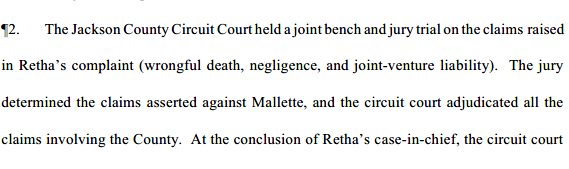
One More Thing – We were this close (maybe) to the Mississippi Supreme Court addressing one of my pet issues: When a case involves an MTCA defendant and a non-MTCA defendant how, exactly, should a hybrid bench/jury trial proceed?


Other Orders

Hutto v. State, 2017-DR-01207-SCT (granting the plaintiff’s Motion for Leave to File Rebuttal to Opposition to Motion for Appointment of Counsel for Representation for Successive Petition for Post-Conviction Relief and the State’s Motion for Leave to File Surrebuttal in Opposition to Motion for Appointment of Counsel for Representation for Successive Petition for Post-Conviction Relief)

Randle v. Randle, 2020-CT-0033-SCT (granting cert)

McPhail v. McPhail, 2020-CA-00739-SCT (denying Motion Pursuant to Rule 8 and Rule 27 of the Rules of Appellate Procedure is hereby denied and remanding to the chancery court of Grenada County for an adjudication of a request for release on bond pending appeal in light of his child support payment subsequent to the February 24, 2022 denial of his prior motion)

HL&C Marion, LLC v. DIMA Homes, Inc., 2020-CT-00750-SCT (CORRECTION: granting cert 6-0)

Williams v. State, 2020-KA-772-SCT (denying rehearing)

Morningstar v. Perkins Law Firm, 2020-CT-1203-SCT (denying cert)

Embrey v. Young, 2021-CT-91-SCT (denying cert)


Hand Down Page

Summaries of the Mississippi Court of Appeals opinions of April 26, 2022

The Mississippi Court of Appeals dropped eight nine opinions today and there is a lot to sort through. Two divorce cases (one involving equitable distribution of a marital residence and the other a life estate via constructive trust for a mother-in-law), a PCR case, a workers’ comp case involving medical causation, an adverse possession/tax sale case, a personal injury via falling through a roof case, an appeal of an estate case dismissed for lack of final order, and two criminal cases. One of the criminal cases is the second “should the indictment for attempt have alleged an overt act” case we have gotten in a row and it sees a dissenting Judge Westbrooks align herself with Justice Coleman’s dissent last week.

I am always balancing the desire to post these summaries quickly and the need to get back to paying work with the desire to provide a reasonably polished [free] product. Due to the number of cases and the fact that I have to leave the office a little early to coach a little league baseball game, there is extra weight on the “speed” side of the balance today.
Thanks,
Management


Archie v. Archie, 2020-CA-01370-COA (Civil – Domestic Relations/Equitable Distribution/Marital Residence)
Affirming the chancellor’s modification of a final judgment of divorce as to equitable distribution of the marital residence, holding that there was no error in the chancellor ordering the ex-wife to sell the paid-off martial home in order to satisfy the ex-wife’s obligation to pay her ex-husband his share of the equity where the ex-wife had been unable to secure a loan on the paid-off house, even though the ex-husband had not pleaded a request for an order requiring the ex-wife to sell the residence. The court repeatedly noted that the chancellor had broad discretion to “fashion an equitable remedy” and held that the chancellor’s remedy here was appropriate.
(Judge Wilson concurred in part and the in the result without separate written opinion.)


Bevalaque v. State, 2021-CP-00150-COA (Civil – PCR)
Affirming dismissal of a pro se plaintiff’s third PCR motion, holding that the motion was time-barred and successive-writ barred and that no exceptions applied.
(All judges concurred.)


Bowdry v. City of Tupelo, 2021-WC-00390-COA (Civil – Workers’ Compensation/Medical Causation)
Affirming the MWCC’s finding that the claimant’s neck claim was not related to his compensable work-injury, holding that the Commission’s finding that the claimant failed to prove causation was supported by substantial evidence.
(All judges concurred.)

PRACTICE POINT: The Court of Appeals noted that on appeal they do not review the AJ’s findings, but the Commission’s findings and did not address the claimant’s arguments about the AJ’s findings:

This is because the Commission does not function as an appellate court reviewing the AJs’ findings. This is because the Commission, not the AJ, is the ultimate trier and finder of fact for workers’ comp claims. See, e.g., Hugh Dancy Co. Inc. v. Mooneyham, 68 So. 3d 76 (Miss. Ct. App. 2011)


Anderson v. Jackson, 2019-CA-01773-COA (Civil – Real Property/Adverse Possession/Unclean Hands/Tax Sale)
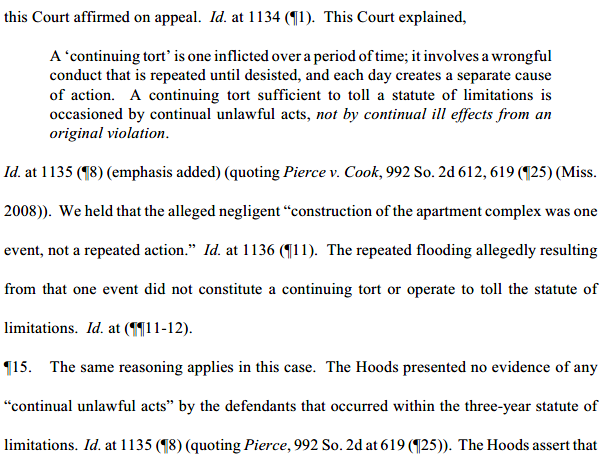
Reversing the chancellor’s findings granting title of real property to one party (Levon) based on findings that Levon had obtained title by adverse possession or by tax sale and that the opposing party (Rosie) had unclean hands, holding that the chancellor erred in granting title to Levon because he failed to prove the elements of adverse possession by clear and convincing evidence, that the tax sale was void due to flawed notice of redemption, and that the doctrine of unclean hands was erroneously applied to bar Rosie’s challenge because Rosie’s conduct was related to a forty-year-old estate case, not the transaction at issue.
(All judges concurred.)

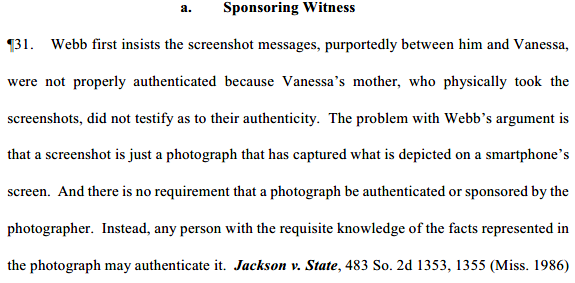
Since accusations of “unclean hands” get thrown around in litigation on occasion, I thought this summary of the equitable doctrine of unclean hands is a useful refresher:

NOTE – As always, but only more so here, if this case applies to your practice you need to read it yourself. There are many details in this forty-page opinion that I have not even attempted to tease apart.


Herron v. Herron, 2021-CA-00090-COA (Civil – Domestic Relations/Constructive Trust/Property Valuation)
Affirming the chancellor’s findings in a divorce action granting a life estate via constructive trust in a home on the marital property to the ex-wife’s mother in assigning value to property awarded to the ex-husband, holding that there was clear and convincing proof that the house was intended to be owned by the mother in a life estate and that there was substantial credible evidence supporting the chancellor’s valuations of the personal property in question.
(All judges concurred.)


Gillespie v. Lamey, 2021-CA-00076-COA (Civil – Personal Injury/Summary Judgment/Duty to Warn)
Affirming summary judgment in favor of a defendant dismissing the plaintiff’s claim for personal injuries sustained when the plaintiff fell through a roof while working on a skylight on the defendant’s property, holding that (1) the plaintiff presented no evidence that the defendant failed to warn the plaintiff of any dangerous condition of which the defendant had actual or constructive knowledge and (2) the allegedly dangerous condition was “intimately connected” to the work he was hired to do.
(Judge Smith did not participate, all other judges concurred.)


Smith v. Richmond, 2020-CP-01064-COA (Civil – Wills, Trusts, and Estates/Civil Procedure)
Dismissing the appeal, holding that the pro se appellant’s attempted appeal of the chancery court’s denial of a Rule 60(b) motion to set aside an interim order, a motion to recuse, and a “motion to change jurisdiction” must be dismissed because each of these motions was an interlocutory order not appealable as of right.
(All judges concurred.)


Wayne v. State, 2021-KA-00084-COA (Criminal – Felony/Rebuttal Evidence/Sufficiency and Weight of Evidence)
Affirming murder conviction, holding that there was no error (1) in allowing the State to recall a State’s witness and introduce and play the defendant’s recorded statement in rebuttal because the recorded statement contradicted the defendant’s trial testimony, (2) in introducing the defendant’s entire statement because it was proper impeachment evidence, or (3) in denying the defendant’s post-trial motion because the evidence was sufficient to support the conviction and that the conviction was not against the weight of the evidence.
(All judges concurred.)


Beale v. State, 2020-KA-00614-COA (Criminal – Felony/Overt Act)
Affirming conviction two counts of attempted murder of two police officers, holding (1) an indictment for the crime of attempted murder does not require the description of an overt act, (2) that two jury instructions did not constitute a constructive amendment to the indictment, and (3) testimony from an officer about what a witness told him at the crime scene was not hearsay because they were not offered to prove the truth of the matter asserted but to explain the next steps in the course of his investigation.
(Judge Westbrooks dissented, joined in part by Judge McDonald. Judge McDonald concurred in part and dissented in part without separate written opinion. Judge Emfinger concurred in part and in the result without separate written opinion. Judge Wilson concurred in result only without separate written opinion. All other judges concurred.)

NOTE – We have gotten an “is the indictment missing an alleged overt act” case in back-to-back hand-down days. In her dissent, Judge Westbrooks’s argues that she is taking a position consistent with the position that Justice Coleman took just last week in Brady v. State (my post here) (opinion link here).


Other Opinions

Durrant Inc. v. Lee County, Mississippi, 2019-CA-01826-COA (denying motion for rehearing)
Bell v. State, 2020-CT-00592-COA (denying motion for rehearing)


Hand Down List

Summaries of the Mississippi Supreme Court’s opinions of April 21, 2022

The Mississippi Supreme Court handed down two opinions today. One decides an interlocutory appeal of the denial of the defendants’ motion for summary judgment in a tire blowout case that hinged on the doctrine of res ipsa loquitur. The other is a criminal case considering convictions for attempted willful trespass and auto burglary that addresses issues of whether the indictment was sufficient, whether evidence of other was acts should have been excluded, and whether the defendant’s “theory of the case” instruction was wrongly denied.


Darling Ingredients Inc. v. Moore, 2020-IA-01149-SCT (Civil – Personal Injury/Res Ipsa Loquitur)
On interlocutory appeal, reversing the circuit court’s denial of the defendants’ motion for summary judgment in an auto liability case stemming from the failure of a tire on the defendants’ vehicle, holding that the doctrine of res ipsa loquitur did not apply because a vehicle’s tire can fail for reasons other than negligence of the vehicle’s driver or owner. Because the doctrine of res ipsa loquitur was not applicable and the plaintiff had no evidence of negligence on the part of the defendants, judgment was rendered for the defendants.
(This decision was unanimous)

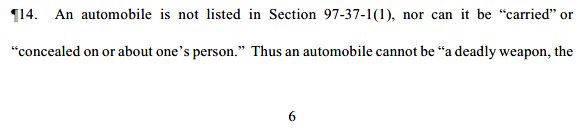
NOTE: Although this opinion stops just short of specifically saying so, I read it as establishing a bright-line rule that the doctrine of res ipsa loquitur is inapplicable to cases where a motorist is injured by the failure of a tire on another vehicle:

This opinion is also noteworthy for its succinct summary of the doctrine of res ipsa loquitur and its analysis of the second element (“the occurrence was such that in the ordinary course of things it would not have happened if those in control of the instrumentality used proper care”) that will be useful in future RIL briefing.


Brady v. State, 2021-KA-00163-SCT (Criminal – Felony/Willful Trespass/Auto Burglary)
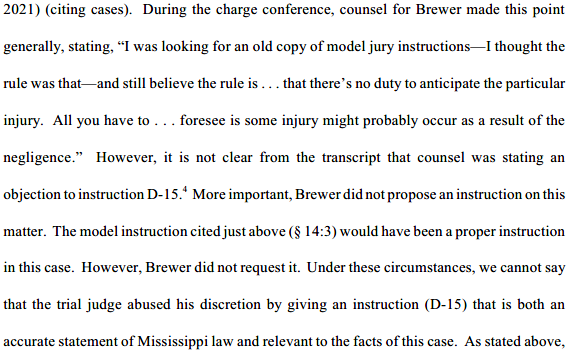
Affirming convictions of attempted willful trespass and two counts of auto burglary, holding (1) no error in denying a motion to quash the indictment for attempted burglary of a dwelling because the indictment adequately alleged an overt act, (2) no error in not sua sponte precluding evidence of other bad acts not related to the indicated charges, and (3) no error in denying a proposed instruction that the defense argued expounded on the defense’s theory of the case where the subject of the proposed instruction was adequately covered in other jury instructions.
(Justice Coleman dissented, arguing that the indictment failed to allege an overt act in furtherance of the attempted breaking and entering)


Other Orders

Carter v. State, 2019-CT-01854-SCT (denying cert petition)
Burgin v. State, 2020-CT-01031-SCT (denying cert petition)
The Mississippi Bar v. Sims, 2021-BD-01090-SCT (granting petition to transfer license to disability inactive status)
In Re: Administrative Orders of the Supreme Court of Mississippi (directing the disbursement of $160,623.66 in civil legal assistance funds among the MS Volunteer Lawyers Project, North MS Rural Legal Services, and MS Center for Legal Services)


Hand Down List


In other news, congratulations to Professor Christopher Green of Ole Miss Law who was cited four (4) times in Justice Thomas’s concurrence in United States v. Madero that was decided today.

Summaries of the Mississippi Court of Appeals opinions of April 19, 2022

The Court of Appeals handed down four opinions today. One case addresses the chancery court’s jurisdiction to hear an appeal challenging cost adjustments from the Department of Medicaid. There is one PCR case with an interesting concurrence regarding the State’s immunity from default judgments. The other two cases are criminal cases: one involving assault of a police officer and the other involving a trial that did not go well for the one co-conspirator who opted not to plead guilty.


Poplar Springs Nursing Center v. Mississippi Division of Medicaid, 2020-SA-01333-COA (Civil – Boards and Agencies)
Affirming the chancery court’s ruling that it did not have subject matter jurisdiction to review a series of cost adjustments by the Department of Medicaid, holding that the nursing home failed to exhaust its administrative remedies by failing to seek timely review of cost adjuster letters.
(Judge Emfinger did not not participate, all participating judges concurred.)


Porras v. State, 2021-CP-00052-COA (Civil – PCR)
Affirming the circuit court’s denial of a PCR motion, holding that there was no error in denying the request for appointed counsel for the PCR hearing, no error in failing to require the State to file a written response to the PCR motion, and, ultimately, no error in denying the PCR motion.
(Judge McCarty wrote special concurrence, joined by Judge McDonald

NOTE: Judge McCarty’s special concurrence thoughtfully addressed the argument that the petitioner was entitled to a default judgment because the State failed to respond the PCR motion in violation of an order of the circuit court. McCarty first set out the law and policy behind establishing a broad prohibition of default judgments against the State. He then wrote that the petitioner had a right to expect the State to comply with the circuit court and had other possible remedies, but that default judgment was not an available remedy.


Bradford v. State, 2021-KA-00509-COA (Criminal – Felony/Simple Assault)
Affirming conviction and sentence for simple assault of a police officer, holding that the evidence was sufficient to establish lawful arrest and that the officer sustained a bodily injury including, but not limited to, evidence of an attempted biting that was thwarted by the officer’s jacket and a kick to the groin that found its mark.
(Judge McDonald concurred in part and in the result without separate written opinion and Judge Westbrooks concurred in result only without separate written opinion.)


Edwards v. State, 2021-KA-00259-COA (Criminal – Felony/Armed Robbery)
Affirmed conviction and sentence for armed robbery and conspiracy to commit armed robbery, holding that the evidence (including evidence from co-conspirators turned State’s witnesses) was sufficient for a reasonable jury to find the elements of a conspiracy to rob a GameStop were proved beyond a reasonable doubt and that the convictions of armed robbery and conspiracy to commit armed robbery were not against the weight of the evidence.
(All participating judges concurred.)


Other Orders

None


Hand Down List Link

Summaries of the Mississippi Supreme Court opinions of April 14, 2022

We will call the blog post title a belated April Fools’ Day joke because the Mississippi Supreme Court did not hand down any opinions today. In the absence of an opinion to summarize, I thought I would share some #AppellateTwitter cringe content that surfaced today.


No litigator likes to lose. Some losses are more frustrating than others. Motions for reconsideration and motions for rehearing are difficult to write and they demand finesse. I would submit that the tack taken by the appellant’s counsel described in per curiam decision from the Fifth Circuit below did not supply the requisite measure of finesse. As tweeted by attorney David R. Fine (who is not the appellant’s counsel referred to in the order):

Well, that strategy didn’t go so well. #appellatetwitter

Originally tweeted by David R. Fine (@finedr1965) on April 14, 2022.

The road to a great motion for reconsideration/motion for rehearing is not the easiest, but overtly insulting the court and court staff is a relatively easy ditch to avoid.

But Twitter did what Twitter does and stirred up some good commentary on how to approach motions for reconsideration/rehearing.

Happy writing. Be careful out there.


Other Orders

Singing River MOB, LLC v. Jackson County, Mississippi, 2019-IA-10630-SCT (denying motion for rehearing)

Magee v. State, 2019-CT-01794-SCT (granting cert petition)

Johnson v. State, 2020-CT-01308-SCT (granting cert petition)


Hand Down List

Summaries of the Mississippi Court of Appeals opinions of April 12, 2022

The Mississippi Court of Appeals handed down two opinions today, one criminal and one civil. The criminal opinion affirmed a conviction, finding no merit on a litany of issues. The civil opinion affirmed summary judgment on a breach of contract claim based on a personal guaranty included in a credit application with a business’s supplier.


Barnes v. State, 2021-KA-00404-COA (Criminal – Felony/Hearsay/Jury Instructions/Rule 404(b))
Affirming conviction of two counts of fondling, holding (1) no error in jury instruction re: sufficiency of unsubstantiated/uncorroborated, but not contradicted/discredited, testimony of victim of a sex crime to support guilty verdict; (2) no error in allowing testimony by investigator “based on professional experience” because not expert opinion; (3) error in allowing hearsay was harmless because the same information was also introduced through admissible source; (4) Rule 404(b) objection re: other students who reported misconduct waived because not made contemporaneously and because it showed why the school initiated an investigation; (5) no error in admitting recorded conversations between victim and defendant where intelligible recording was not produced until the first day of trial (at least partially because defense did not request more time to prepare); (6) no error in admitting purported statement of the defendant over discovery violation objection because the statement had produced in discovery and defense counsel admitted being familiar with it; (7) no merit to ineffective assistance of counsel claim; and (8) the evidence was sufficient to support the convictions. The court of appeals invoked the plain error doctrine to remand the case for correction of a scrivener’s error in the sentencing order.
(Judge Westbrooks and Judge McDonald concurred in part and in the result without separate written opinion. Judge McCarty concurred in result only without separate written opinion.)


Devine v. Cardinal Health 110, LLC, 2020-CA-01101-COA (Civil – Contract/Personal Guaranty/Affirmative Defenses)
Affirming the circuit court’s grant of summary judgment in favor of the plaintiff/supplier, holding that there was no error in finding that the owners of a company had personally bound themselves to pay their company’s debt to the plaintiff/supplier per the terms of a credit application that contained a personal guaranty. The court of appeals noted that the defendants did not attach affidavits in response to the summary judgment motion that addressed the guaranty:

The court of appeals then held that the plaintiff/supplier–a secured creditor– had no duty to mitigate before filing a lawsuit for damages and that the defendant that asserted fraud in response to the motion for summary judgment had waived that affirmative defense by failing to plead it in his answer to the complaint.
(All judges concurred.)


Other Orders

Hartzler v. Bosarge, 2019-CT-01606 (granting motion to dismiss appeal as interlocutory)

Doe v. Doe, 2020-CA-00853-COA (denying motion for rehearing)

Braswell v. Braswell, 2020-CA-01090-COA (denying motion for rehearing)

Nunn v. State, 2021-TS-01371-COA (granting pro se motion for out-of-time appeal and granting motion to withdraw and substitute counsel)


Hand Down List

Summaries of the Mississippi Supreme Court opinions of April 7, 2022

The Mississippi Supreme Court handed down five opinions today. I think Weber v. Estate of Hill will be a frequently cited case on the issue of medical expert causation testimony, especially in the medical malpractice context. There is also an insurance coverage decision (where the court granted interlocutory appeal and then affirmed the circuit court), another medical malpractice case dealing with a hospital’s lack of liability for treatment plans of independent physicians, a contempt of youth court case, and a Mississippi Bar disciplinary decision.


Donaldson v. Cotton, 2020CA-00581-SCT (Civil – Other/Contempt)
Vacating the a youth court judge’s order of contempt against a county prosecutor fining him for past and continuing refusal to draft youth court orders, holding that youth court judges have inherent authority to order a county prosecutor to prepare orders in youth court matters but that the alleged contempt was constructive criminal contempt and thus the attorney’s due process rights were violated. The order was vacated, the case was remanded, and the youth court judge was direct to recuse for further proceedings.
(Justice Coleman dissented, joined by Chief Justice Randolph and Justice Beam.)


Weber v. Estate of Hill, 2020-CA-00293-SCT (Civil – Medical Malpractice/Causation/Experts)
Denying rehearing and and modifying two paragraphs (¶ 37 and ¶ 38) of the original opinion. On direct appeal, the supreme court affirmed the circuit court’s denial of the defendants’ motion for JNOV that argued there was no admissible expert testimony on causation, holding that the testimony of one of the plaintiff’s medical experts provided a basis for a juror to reasonably conclude that a timely C-section delivery would have provided the baby with a greater-than-50-percent chance of a substantially better outcome even though that expert testified that he lacked the expertise necessary to quantify the degree to which the labor and delivery process aggravated the injury. On cross appeal, the supreme court reversed the circuit court’s reduction of the jury’s $2,538,322 award for non-economic damages, holding that this action filed in December 2002 was governed by Mississippi’s wrongful-death statute because the medical-malpractice noneconomic-damages cap was not in place until September 1, 2004.
(Justice Griffis dissented, joined by Justice Coleman and Justice Maxwell. Chief Justice Randolph did not participate.)

NOTE: This was a big win for the plaintiff and it is a must-read case on medical expert causation testimony, especially in the medical malpractice context. I have not read the record, but my understanding from the majority opinion and the dissent is that no expert specifically testified that a timely C-section delivery would have provided the baby with a greater-than-50-percent chance of a substantially better outcome. Instead, the supreme court allowed the jury to “connect the dots” (the “dots” being other pieces of expert testimony) in determining that the plaintiff satisfied that causation standard even though the plaintiff’s obstetrics and maternal-fetal medicine expert testified he was not qualified to connect these dots and give an opinion as to the percentage aggravation would be.


Mississippi Farm Bureau Casualty Insurance Company v. Powell, 2020-IA-00432-SCT (Civil – Insurance/Coverage)
On interlocutory appeal, affirming the circuit court’s denial of the insurance company’s motion for summary judgment seeking a declaratory judgment that it had no duty to provide coverage, no duty to defend/indemnify, and no duty to pay medpay benefits, holding that a fall from scaffolding that was erected on a trailer that was hitched to an insured pickup was an auto accident arising out of the use and ownership of the covered vehicles.
(Justice Maxwell concurred in result only, joined by Justice Chamberlain and Justice Griffis, and joined by Justice Coleman in part.)


St. Dominic-Jackson Memorial Hospital v. Newton, 2020-IA-00494-SCT (Civil – Medical Malpractice)
On interlocutory appeal, reversing the circuit court’s denial of the hospital’s motion for summary judgment, holding that the Mississippi law does not impose a duty on a hospital to require peer review of a treatment plan before allowing a doctor and patient to use its facilities.
(Justice Kitchens dissented, joined by Justice King.)

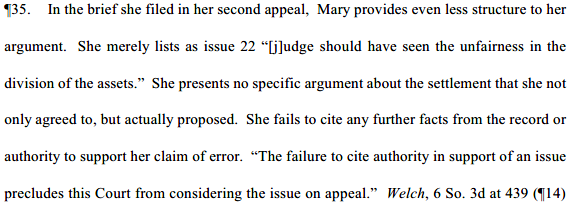
PRACTICE POINT: This is less-than-ideal feedback to receive from the supreme court…

Other Orders

Howell v. State, 2020-CA-00868-SCT (directing the parties to file supplemental briefs on the following issue: Whether the Court should overrule Rowland v. State, 42 So. 3d 503 (Miss. 2010), and any other case in which, and to the extent that, we have held the fundamental rights exception to the procedural bars may be applied to the three-year statute of limitations codified by the Legislature in the Uniform Post-Conviction Collateral Relief Act)

Bryant v. Bryant, 2020-CT-00883-SCT (granting cert)

Newell v. State, 2020-CT-01137-SCT (denying cert)

Thornhill v. Walker-Hill Environmental, 2020-CT-01181-SCT (granting cert)

The Mississippi Bar v. Malone, 2021-BD-00467-SCT (suspending attorney Robert W. Malone for two years)


Hand Down List

Summaries of the Mississippi Court of Appeals opinions of April 5, 2022

After a slow week on the opinion front the Mississippi Court of Appeals is back in action with eight opinions today. There is a domestic relations case dealing with a slew of arguments about child support and child custody, a criminal appeal addressing waiver of potential conflicts with codefendants being represented by a single attorney, a disability opinion, an unemployment opinion, and several PCR opinions.


Wallace v. Wallace, 2020-CA-01148-COA (Civil – Domestic Relations/Custody/Child Support)
Affirming the chancellor’s decisions related to a series of motions related to child support and custody modification:
1. No error in finding the father in arrears for child support for the period of time during which the mother had voluntarily modified the custody arrangement, but not the child support arrangement.
2. No error in finding the father in arrears for nonapyment of daycare and after-school expenses even though the mother “stockpiled” receipts for years rather than presenting them every 30 days as required by the MDA.
3. No error in decision that the mother was not in contempt for withholding visitation in light of the “substantial discretion regarding contempt matters” afforded to chancellors and evidence in the record that visitation was never withheld.
4. No error in no awarding both parents the right to claim the children as dependents for tax purposes because in the absence of specific findings of fact the court assumes the chancellor resolved any factual disputes in favor of the appellee.
5. No error in declining to hold the mother in contempt over the aforementioned stockpiling of daycare/after-school receipts.
6. No error in awarding the mother attorney’s fees in light of the fact that the father was held in contempt.
7. No error in awarding just $1,000 in attorney’s fees to the father for the mother’s violation of the morals clause considering the discretion chancellor’s enjoy on such decisions.
8. No error in ordering the father to provide for the children’s health insurance considering the children’s loss of access to employment-related insurance after the mother’s job was eliminated due to COVID-19.
(Judge Westbrooks and Judge McCarty concurred in part and in the result without separate written opinion)


Magee v. State and Haynes v. State, 2020-KA-01378-COA (Criminal – Felony/Waiver of Potential Conflicts/Dual Representation/Sufficiency of the Evidence/Jury Instructions)
Affirming convictions of co-defendants in consolidated appeals. The court of appeals affirmed the circuit court’s ruling giving the defendants what they asked for by allowing them to waive potential conflicts with being represented by the same attorney, finding that the defendants knowingly and intelligently waived the potential conflicts. The court of appeals held that the evidence was sufficient to support the convictions of both defendants for kidnapping and conspiracy, and the conviction of one defendant for sexual battery. Finally, the court of appeals held that there was no error in denying two of the defendants’ proposed jury instructions or in the circuit court’s sua sponte conspiracy instruction.
(All judges concurred)


Hickerson v. State, 2021-CA-00176-COA (Civil – PCR)
Affirming the circuit court’s denial of a petition for PCR, holding that there was no error in finding that the petition was procedurally deficient for failing to attach competent affidavits and that the claim of ineffective assistance of counsel was meritless.
(Chief Judge Barnes concurred in part and in the result without separate written opinion; Judge Lawrence did not participate)


Barbour v. Singing River Health System Employees’ Retirement Plan and Trust, 2020-CA-01407-COA (Civil – State Board and Agencies/Disability)
Affirming the chancellor’s decision denying disability benefits, holding that to the extent the chancellor’s reference to an incorrect standard of review was in error, it was harmless because the plaintiff was not an “employee” of Singing River at the time of his injury.
(Judge Wilson concurred in part and in result, joined by Judge Smith and Judge Emfinger and in part by Judge McCarty)


Handyman House Techs, LLC v. Mississippi Department of Employment Security, 2021-CC-00029-COA (Civil – State Boards and Agencies/MDES)
Affirming the circuit court’s decision affirming MDES’s determination that an applicant for unemployment benefits was a “employee” rather than an “independent contractor,” holding that the MDES Board of Review’s decision was not arbitrary or capricious.
(Chief Judge Barnes and Judge McCarty concurred in part and in the result without separate written opinion)


Ford v. State, 2020-CP-00372-COA (Civil – PCR)
Affirming the circuit court’s dismissal of a PCR motion, holding that the circuit court correctly ruled that the second PCR motion was an impermissible successive motion.
(All judges concurred)


Thompson v. State, 2020-CP-01236-COA (Civil – PCR)
Affirming the circuit court’s dismissal of a PCR, finding no merit to the claims that the indictment was defective, that the guilty plea was not knowingly and intelligently entered, that the defendant’s attorney had a conflict of interest and provided ineffective assistance of counsel, or that the defendant’s statement and the victim’s statement were coerced.
(All judges concurred)


Booker v. State, 2018-CA-00664-COA (Civil – PCR/Miller)
On rehearing, withdrawing a previous opinion and substituting an opinion holding that the circuit court did not err in determining that the defendant did not have a statutory right to be resentenced under Miller, that the circuit court did not err in denying the defendant’s request for parole eligibility, that the defendant was not deprived of an opportunity to be heard on the issue of rehabilitation, that the defendant failed to prove ineffective assistance of counsel, and that the sentence was not unconstitutional based on arguments about the defendant’s age and IQ.


Other Orders

Walker v. State, 2020-KA-228-COA (denying motion for rehearing)


Hand Down List

Summaries of the Mississippi Supreme Court’s opinions of March 31, 2022

The mix of beautiful spring weather and apocalyptic tornado warnings this week set the stage for just one opinion from the Mississippi Supreme Court to compliment the one opinion handed down by the Mississippi Court of Appeals on Tuesday. The case today is an insurance coverage dispute that analyzes several provisions of an excess policy and determines that summary judgment finding of no coverage under a pollution exclusion was in error.


Omega Protein, Inc. v. Evanston Insurance Company, 2020-CA-01097-SCT (Civil – Insurance/Insurance Coverage/Excess Insurance)
The Supreme Court reversed the circuit court’s grant of the excess carrier’s motion for summary judgment in a dec action where the excess carrier sought a declaration of no coverage for injuries and a death sustained in a plant explosion that occurred while a contractor was performing welding work at the plant. The Supreme Court held that (1) a pollution exclusion did not apply as a matter of law because it was ambiguous and susceptible to more than one interpretation and must be construed in favor of coverage, (2) coverage under the excess policy was not triggered by the primary insurer paying out limits because there had been no adjudication of fault or negligence of the named-insured contractor, and (3) the issue of the plant’s status as an additional insured under the insured contractor’s excess policy could not be determined because there had been no adjudication of fault or negligence of the named-insured contractor.
(All justices concurred)


Other Orders

Dooley v. Dooley, 2020-CA-01061-SCT (dismissing appeals filed by appellant and appellees for want of jurisdiction)
Omega Protein, Inc. v. Evanston Insurance Company, 2020-CA-01097-SCT (denying motion for rehearing, withdrawing original opinion, and substituting the opinion above)


Hand Down List

Summaries of the Mississippi Court of Appeals opinions of March 29, 2022

The Court of Appeals handed down one opinion today that is part MTCA decision on the open and obvious defense and part cautionary tale about the hazards of, and interplay among, Rules 54(b), 59(b), and 60(b) of the Mississippi Rules of Civil Procedure and Rule 3 of the Mississippi Rules of Appellate Procedure. Since I just had one opinion to wrestle with today I took a deeper dive into the timeline and the motions filed at the trial court level.


McGee v. Neel Schaffer Engineers and Planners Inc., 2020-CA-01277-COA (Civil – Wrongful Death)
Affirming in part the circuit court’s order granting summary judgment as to some defendants and dismissing the appeal as to the other defendants. The plaintiff’s decedent died of electrocution while moving a water pump on a State-aid culvert reinforcement project due a conflict with a utility line. The plaintiff filed suit against Pike County, Toles (the County’s State-aid engineer), Neel Schaffer (the engineer’s employer), and others not relevant to this appeal. The timeline is key to unpacking this opinion:

  • July 27, 2018: Summary judgment granted to Neel Schaffer’s because Toles was acting as a county employee and immune under the MTCA and that as a corollary Neel Schaffer, as Toles’s employer, was entitled to MTCA immunity. Final judgment entered as to the claims against Neel Schaffer using the magic words of Rule 54(b) (i.e. “final judgment” and “no just reason for delay”).
  • August 1, 2019: Summary judgment granted in favor of Toles on the claims against him in his individual capacity because it had previously determined Toles was entitled to MTCA immunity. Final judgment entered as to these claims.
  • June 18, 2020: The plaintiff filed a “motion to reconsider” the July 27, 2018, and August 1, 2019, summary judgments.
  • September 21, 2020: Plaintiff’s motion to reconsider was properly treated as a Rule 60(b) motion rather than a Rule 59(b) motion because it was filed more than ten days after the judgments had been entered, found to be untimely and meritless under Rule 60(b), and therefore denied.
  • October 28, 2020: Summary judgment granted as to the claims against Pike County and Toles in his official capacity, finding that they were entitled to immunity under the MTCA.
  • November 17, 2020: The plaintiff appealed from the summary judgments of July 27, 2018; August 1, 2019; and October 28, 2020, but not the September 21, 2020 denial of the motion to reconsider.
  • November 24, 2020: Neel Schaffer and Toles in his individual capacity filed a motion to dismiss the appeal as untimely.
  • November 25, 2020: The circuit court entered a final judgment as to the claims against Pike County and Toles in his official capacity.
  • December 4, 2020: Plaintiff filed an amended notice of appeal, again appealing only the summary judgments.
  • December 8, 2020: Neel Schaffer and Toles filed a second joint motion to dismiss the appeal as untimely.

The Court of Appeals first addressed the July 27, 2018, and the August 1, 2019, final judgments, and held that because the plaintiff did not file a motion to reconsider within ten days of either judgment or a notice of appeal within thirty days of either judgment, the plaintiff’s appeal of those judgments was untimely.

The Court of Appeals then addressed the dismissal of the claims against Pike County and Toles, holding that the circuit court did not err in finding that the dangerous condition was open and obvious, was not created by the government’s negligent maintenance or repair and it, and was not caused by Toles. The Court noted that the issue of whether a danger is open and obvious is usually a question for the trier of fact, but that there are cases where conditions are so clearly dangerous that the issue can be decided as a matter of law. The Court also held that neither Pike County nor Toles could be liable for causing a dangerous condition created by a third-party without notice and sufficient time to correct the dangerous condition:

(All judges concurred)

PRACTICE POINT: If you win summary judgment as to fewer than all claims/parties, request a 54(b) final judgment like the defendants did here. If the other side wins summary judgment as to fewer than all claims/parties, beware of a 54(b) final judgment that starts your appeal shot clock.


Other Orders

Wilson v. State, 2020-CP-00762-COA (denying motion for rehearing)
Hardin v. Hardin, 2020-CA-1314-COA (denying appellee’s motion for appellate attorney’s fees)
Jiles v. State, 2021-CP-34-COA (denying motion for rehearing)


Hand Down List