Mississippi Supreme Court Decisions of October 13, 2022

The Mississippi Supreme Court handed down three opinions today. The first addresses whether the use of a residential home violated a covenant prohibiting commercial use. The second opinion contains a thorough analysis of a personal jurisdiction issue (citing classics like International Shoe and World-Wide Volkswagen). The third opinion involves the allocation of sixteenth-section funds between neighboring school districts. The Court also handed down an en banc order on a motion for leave to file successive petition for PCR that is linked below.


Scioto Properties SP-16, LLC v. Graf, 2021-CA-00525-SCT (Civil – Real Property)
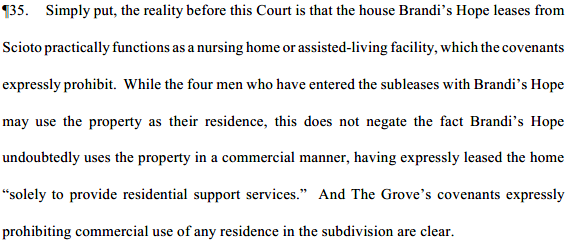
Affirming the chancery court’s holding that a for-profit LLC used a home commercially, holding that the “leas[ing] of the home for the specific and sole purpose of providing the residential support services itself and being compensated for doing so through Medicaid” violated a restrictive covenant against commercial use.
(9-0)

NOTE – The Court explained that the commercial services were “integral” and “not merely incidental” to the operation of the home and summarized the holding as follows:


Dillworth v. LG Chem, Ltd., 2021-CA-00629-SCT (Civil – Personal Injury)
Reversing the circuit court’s ruling that it lacked personal jurisdiction over a South Korean battery manufacturer, holding that the manufacturer placed the batteries in the stream of commerce and purposefully availed itself of the market for batteries in Mississippi and was subject to personal jurisdiction in Mississippi and holding that the plaintiff was entitled to jurisdictional discovery as to a Georgia-based subsidiary of the manufacturer.
(9-0)

PRACTICE POINT – This decision is the latest full-bore analysis of personal jurisdiction and it comes from a unanimous Supreme Court. Go ahead and bookmark this one.


Jones County School District v. Covington County School District, 2019-IA-00985-SCT (Civil – Real Property)
Vacating the chancellor’s ruling in a dispute over sixteenth-section income from townships shared by neighboring school districts and remanding, holding that the statute conditioning annual payment of sixteenth-section funds on the exchange of lists of educable children is constitutional and that the maintenance of the principal fund by the custodial district is subject to an action in equity for accounting.
(6-3: Justice Griffis concurred in part and dissented in part, joined by Justice Kitchens and Justice King)


Other Orders

Ware v. Ware, 2020-CA-00702-SCT (denying motions for rehearing)
Moffett v. State, 2018-DR-00276-SCT (denying motion for leave to file successive petition for PCR)
Smith v. Mississippi Department of Public Safety, 2021-CT-00020-SCT (denying cert)
Barnes v. State, 2021-CT-00404-SCT (denying cert)


Hand Down List

Mississippi Supreme Court Decisions of September 29, 2022

The Mississippi Supreme Court handed down four opinions today. There is a case dealing with an attempt to collect early termination fees after a new board of supervisors terminated a service contract, a case dealing with a thorny procedural issue after a default judgment was entered on a counterclaim in an appeal from justice court, a domestic case regarding the parent’s school choice with potentially broader implications, and a criminal case addressing the weight of the evidence and improper testimony about prior convictions.


Broadband Voice, LLC v. Jefferson County, Mississippi, 2021-CA-01082-SCT (Civil – Contract)
Affirming the circuit court’s dismissal of a phone and internet company’s claim for early termination fees against the county after new slate of supervisors terminated the service contract, holding that under the plain language of the contract the fee was due on the termination date rather than the date of the notice of termination and that the early-termination-fee provision that was negotiated by the prior board was unenforceable against the subsequent board.
(9-0)


Gordon v. Dickerson, 2020-CT-00601-SCT (Civil – Real Property)
Reversing the Court of Appeals, the circuit court, and the county court for denying the landlord’s motion to set aside a default judgment in county court on the tenant’s counterclaim that she asserted on appeal from justice court, holding that the landlord was not in default for purposes of Rule 55 because the counterclaim was filed in violation of Rule 15(a) (re: amendment of pleadings) and Rule 13(k) (re: appeals from justice court) cannot be read to the exclusion of Rule 15(a).
(5-4: Chief Justice Randolph dissented, joined by Justice Kitchens and Justice Ishee; Justice King dissented, joined by Justice Kitchens.)

Practice Point – There is a lot of explanation of the various rules in play in this decision. Bookmark this one and re-read it whenever you handle and appeal from justice court.


Bryant v. Bryant, 2020-CT-00883-SCT (Civil – Domestic Relations)
Affirming the Court of Appeals and the chancellor in ordering that the three minor children attend a specific public school district over the wishes of their father who was made the “final decision maker” on such matters, holding that the language of the property settlement agreement authorized the chancellor use its powers “as superior guardian to make decisions that are in the best interest of children.”
(6-3: Justice Coleman dissented, joined by Justice Maxwell and Justice Griffis; Justice Maxwell wrote a separate dissent joined by Justice Coleman.)

NOTE – The majority and the dissents disagree on a big-picture issue: the relationship between the government’s role in the relationship between parents and children. Take a few minutes and read the majority and both dissents.


Moore v. State, 2021-KA-00420-SCT (Criminal – Felony)
Affirming conviction of aggravated assault, holding that the verdict was not against the overwhelming weight of the evidence because inconsistencies in testimony did not render the verdict implausible and holding that although it was improper for the prosecution to directly elicit testimony about past convictions the error was potentially waived and ultimately harmless.
(6-3-0: Justice Maxwell concurred in part and in the result, joined by Chief Justice Randolph and Justice Beam.)


In Re: Rules Governing Admission to The Mississippi Bar, 89-R-99012-SCT (reappointing Pieter Teeuwissen, Marcie Fyke Baria, and Gwendolyn Baptist-Rucker to three-year terms (11/1/22 through 10/31/25) as members of the Mississippi Board of Bar Admissions)
Millette v. Frazier, 2022-M-00451-SCT (denying petition for permission to appeal and lifting stay of trial court proceedings)


Hand Down List

Mississippi Supreme Court Decisions of September 22, 2022

The Mississippi Supreme Court handed down three opinions today. Two are criminal cases dealing with issues that occurred during voir dire. In one, the issue was an inculpatory exclamation by the defendant. In the other, the issue was two jurors’ undisclosed connection the defendant. The third opinion is a journey through contempt law.


Scott v. State, 2021-KA-01015-SCT (Criminal – Felony)
Affirming conviction of burglary, holding that the court did not abuse its discretion denying the defendant’s attorney’s request for a mistrial after the defendant exclaimed during voir dire that he was “guilty as hell.”
(9-0)

Note – This decision seems correct to me.


Watts v. State, 2021-KA-00873-SCT (Criminal – Felony)
Affirming denial of a JNOV after the defendant was convicted of conspiracy to commit armed robbery, attempted armed robbery, aggravated assault, and possession of a firearm by a convicted felon and a denial, holding that although two jurors did not disclose that they were related to a man who was murdered by the defendant’s brother in 2006 the court did not commit clear error in determining after an evidentiary hearing that those jurors lacked substantial knowledge of their connection with the defendant during voir dire.
(9-0)


Seals v. Stanton, 2020-CA-00741-SCT (Civil – Domestic Relations)
This decision waded into a morass of contempt and affirmed the chancellor in part, reversed and remanded in part, and vacated in part. The Supreme Court affirmed the chancellor’s finding that two attorneys handling a divorce proceeding were in direct criminal contempt for missing a hearing, vacating the penalty for that because it exceeded statutory authority and remanded on that issue, and affirmed an award of attorney’s fees to the other side. The Supreme Court vacated judgment of direct criminal contempt against another attorney and remanded for proceedings on under the constructive criminal contempt standards. The Supreme Court held that the chancellor erred in finding these attorneys in direct criminal contempt for violating a court order and remanded for a determination of whether an indirect civil contempt proceeding should be commenced.
(6-3: Justice Kitchens dissented, joined by Justice King and Justice Coleman.)

Practice Point – Don’t miss hearings. Don’t violate orders. If you have further questions about what went wrong here or about the intricacies of direct criminal contempt, indirect/constructive criminal contempt, and civil contempt I refer refer you to the opinion and wish you the best.


Other Orders

Hamer v. State, 2019-CT-01633-SCT (denying cert)
Nowell v. Stewart, 2020-CT-00728-SCT (denying cert)
Johnson v. State, 2022-CT-01308-SCT (dismissing cert sua sponte)


Hand Down List

Mississippi Supreme Court Decisions of September 15, 2022

The Mississippi Supreme Court handed down three opinions from very different areas of law without a single dissent today. The first is a criminal case challenging the sufficiency and weight of the evidence. The second deals with the circuit court’s subject matter jurisdiction over a election contest. The third is a divorce appeal dashed on the rocks of 54(b).


Burden v. State, 2021-KA-00782-SCT (Criminal – Felony)
Affirming conviction of aggravated assault and denial of the defendant’s motion for new trial, holding that the evidence including testimony, medical records, and photographs was sufficient to show that the victim suffered serious bodily injury and that the defendant attempted to cause serious bodily injury and the verdict was not against the overwhelming weight of the evidence.
(9-0)


Holliday v. Devaull, 2021-EC-00486-SCT (Election Contest)
Reversing the circuit court’s decision ordering a special election, holding that the circuit court lack subject matter jurisdiction because the plaintiff failed to file a sworn copy of his complaint to the Aberdeen Municipal Democratic Executive Committee within the 10-day statutory period and that the second amended petition did not relate back to the original petition.
(9-0)


Williams v. Williams, 2021-CA-00875-SCT (Civil – Domestic Relations)
Dismissing the appeal, holding that an order granting husband’s motion to enforce the divorce agreement and entering what was called a “final judgment” incorporating the divorce agreement was not a final, appealable judgment because the court had not resolved the wife’s complaint for divorce and the grounds for divorce.
(8-1-0)

Practice Point – Our remorseless foe Rule 54(b) strike again. If anything is left to be decided, be sure the judgment you want to appeal contains the magic language of a Rule 54(b) final judgment.


Other Orders

Miles v. State, 2019-CT-00895-SCT (rehearing denied)
Mingo v. McComb School District, 2020-CT-00022-SCT (denying cert)
Simmons v. Town of Goodman, Mississippi, 2021-EC-00563-SCT (denying rehearing)


Hand Down List

Mississippi Appellate Decisions of September 6 and September 8, 2022

I was out of the office for an extracurricular conference on Tuesday. (I will issue a full refund for my failure to timely deliver those summaries.) All we got from the Mississippi Supreme Court this week is a rehearing denial and a denial of an application for post-conviction collateral relief. I have written even-shorter-than-normal snapshots of the Court of Appeals decisions below, which turned out to be almost entirely PCR and state boards and agencies decisions.


Supreme Court Orders of September 8, 2022

Chatman v. State, 2016-M-00424 (denying application for post-conviction collateral relief and warning that future filings deemed frivolous may result in sanctions and restrictions on filing in forma pauperis)

Russell v. State, 2019-CT-01670-SCT (denying rehearing)

Supreme Court Hand Down List


Court of Appeals Decisions of September 6, 2022

Burns v. State, 2021-KA-00310-COA (Criminal – Felony)
Affirming conviction of possession of meth and sentencing, holding that the verdict was not against the overwhelming weight of the evidence that the trial court did not err in refusing the defendant’s instruction on possession, and denying the pro se argument that he received ineffective assistance without prejudice.
(10-0)


Caston v. State, 2021-CA-00397-COA (Civil – PCR)
Affirming denial of PCR motion, holding that the plaintiff waived the right to challenge proportionality by pleading guilty and, in any event, failed to prove gross disproportionality.
(10-0)


Nguyen v. Bui, 2021-CP-00538-COA (Civil – Real Property)
Affirming the chancery court’s judgment mandating specific performance of a real estate contract, holding that the appellant’s argument did not raise issues of reversible error, lacked citation to authority, and were beyond the scope of appellate review.
(10-0)


Beasley v. State, 2021-CA-00653-COA (Civil – PCR)
Affirming denial of the plaintiff’s PCR motion, holding that the plaintiff failed to meet the two-prong Strickland test required to establish ineffective assistance of counsel.
(9-0: Judge Emfinger did not participate)


Norwood v. State, 2021-CA-00802-COA (Civil – PCR)
Affirming denial of the plaintiff’s PRC motion, holding that the plaintiff did not prove that his due process rights were violated or that he received ineffective assistance of counsel.
(10-0)


Roberts v. State, 2021-CA-00998-COA (Civil – PCR)
Affirming the circuit court’s denial of the plaintiff’s motion for PCR, holding that the plaintiff’s claim as to the voluntariness of his guilty plea was procedurally barred and meritless and that his claim of ineffective assistance of counsel was meritless.
(10-0)


Wilson v. City of Greenville, 2021-CA-00316-COA (Civil – State Boards and Agencies)
Affirming the circuit court’s dismissal of the plaintiff’s untimely appeal of the Greenville City Council’s decision to accept and enforce his resignation as police chief and in granting the City’s replevin action for city equipment in the plaintiff’s possession and denying the plaintiff’s counterclaim and motions to dismiss/stay, holding that the City’s decision was supported by substantial, credible evidence and that the circuit court committed no error.
(8-1-0: Judge Wilson concurred in result only without separate written opinion; Judge Westbrooks did not participate)


Thomas v. PERS, 2021-SA-00375-COA (Civil – State Boards and Agencies)
Affirming the circuit court’s judgment affirming the PERS Board, holding that the Board’s decision that the plaintiff failed to prove she could no longer perform her duties as a bus aid as a result of her workplace accident was supported by substantial evidence and was not arbitrary or capricious.
(10-0)


Laurel School District v. Lanier, 2021-CA-00384-COA (Civil – State Boards and Agencies)
Affirming the chancery court’s decision dismissing the plaintiff’s complaint against the school district stemming from the school district’s failure to conduct a nonrenewal hearing, holding that the chancery court had jurisdiction to consider the complaint seeking relief for due process violations and to dismiss the claim so the plaintiff could obtain the hearing he had been denied.
(7-3: Judge Westbrooks dissented, joined by Chief Judge Barnes and Judge McDonald)

Other Court of Appeals Orders

Brewer v. Kemp, 2020-CA-00214-COA (denying rehearing)

Court of Appeals Hand Down List

Mississippi Supreme Court Decisions of September 1, 2022

The Mississippi Supreme Court handed down three opinions today. Two are criminal cases (one affirmed and one reversed/remanded over a speedy trial issue and resentencing). The other is a breach of contract case with a tough result for a law firm stuck with the tab after dealings with the State Auditor’s office (while under previous management).


Haymon v. State, 2021-KA-00240-SCT (Criminal – Felony)
Affirming Pernell and Haymon’s convictions of armed robbery, kidnapping, and aggravated assault, holding that the circuit court did not err in denying Pernell’s motion for directed verdict and/or motion for new trial because the evidence was sufficient and the verdict was not against the overwhelming evidence or in denying her request for a lesser included offense jury instruction for simple assault, and that the circuit court did not err in denying Haymon’s motion to suppress a photo identification lineup over the defendant’s arguments that an officer tainted the procedure by providing the witness with the defendant’s name and that the features of the individuals used in the lineup were suggestive.
(9-0)

NOTE – On the issue of whether it was error to the lesser included instruction on simple assault, the Supreme Court explained that aggravated assault occurs when there is assault with a deadly weapon and that severity of the injury is irrelevant:


White v. Jernigan Copeland Attorneys, PLLC, 2020-IA-01404-SCT (Civil – Contract)
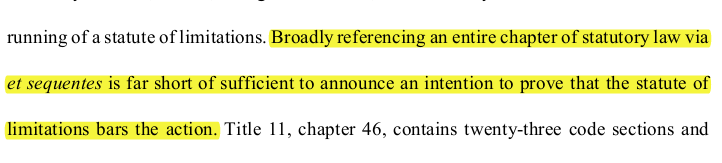
Reversing the circuit court’s denial of the Office of the State Auditor’s motion for summary judgment in a suit filed by a law firm seeking damages for a judgment it had to pay a public-relations firm that the law firm contracted with at the direction of then Auditor Pickering, holding that the retention agreement between the OSA and the law firm was void for lack of statutory compliance and that the law firm’s equitable claims against the OSA were barred by the MTCA’s statute of limitations, sticking the law firm with the (substantial) tab from the PR firm it contracted with at Pickering’s direction in anticipation of filing a suit that Pickering decided not to file.
(8-1-0: Chief Justice Randolph concurred in the result only without separate written opinion)

NOTE – This result is brutal. Pickering provided an affidavit to support the law firm’s quest to have the OSA pay the damages but the outcome of the case was controlled by statutes.


Ward v. State, 2021-KA-00664-SCT (Criminal – Felony)
Reversing the circuit court and remanding for a speedy trial-analysis and (assuming no violation is found) re-sentencing, holding that the circuit court did not conduct a proper analysis of the Barker factors when it denied the defendant’s motion to dismiss for lack of a speedy trial and erred in sentencing the defendant as a habitual offender because the proper evidence of the prior convictions was not admitted into evidence.
(7-2: Justice Maxwell concurred in part and dissented in part on the resentencing issue, joined by Justice Griffis)

COVID ADDENDUM – The COVID pandemic accounted for part of the delay in bringing this case to trial, but the Supreme Court explained that blaming COVID does not cure all delay:


Other Orders

In Re: Rules of Discipline for the Mississippi Bar, 89-R-99010-SCT (reappointing Hon. Johnnie McDaniels, Mack A. Reeves, Amy K. Taylor, Hon. Jennifer T. Schloegel, Renee M. Porter, Henry B. Zuber III, Hon. H. Craig Treadway, Jason D. Herring, and Rachel Pierce Waide to three-year terms as members of the Complaint Tribunals)

Shannon v. Shannon, 2020-CT-00847-SCT (granting cert) (COA opinion summary and link here)


Hand Down List

Mississippi Supreme Court Decisions of August 25, 2022

After a full day of lawyering on the road, here are my summaries of today’s decisions from the Mississippi Supreme Court. There is a decision in a dispute between a report and the Secretary of State over use and development of tidelands, a decision in a reimbursement dispute between the Division of Medicaid and a nursing home, and a decision in a workers’ comp bad faith case analyzing whether a compromise settlement of a comp claim on a denied basis constituted an exhaustion of administrative remedies.


State v. Long Beach Harbor Resort, LLC, 2021-CA-00430-SCT (Civil – State Boards and Agencies)
Affirming the chancery court’s grant of summary judgment in favor of the resort, holding that the Secretary of State’s lease with the city related to development and use of tidelands had ratified a prior lease between the city and the resort and therefore the State had no right to require the resort to enter into a separate tidelands lease.
(9-0)


Mississippi Division of Medicaid v. Yalobusha County, 2021-SA-00030-SCT (Civil – State Boards and Agencies)
Reversing the chancery court’s ruling in a dispute between the DOM and a nursing home over costs the facility submitted for reimbursement on its Medicaid cost report, holding that the DOM correctly interpreted statutes and its decisions denying the costs at issue were supported by substantial evidence.
(7-2: Justice Griffis dissented, joined by Justice Maxwell)


Thornhill v. Walker-Hill Environmental, 2020-CT-01181-SCT (Civil – Torts/Bad Faith)
Affirming the Court of Appeals’ decision reversing the circuit court’s dismissal of the plaintiff’s workers’ comp bad faith suit, holding that the plaintiff’s 9(I) settlement of his workers’ comp claim without a finding of compensability constituted an exhaustion of his administrative remedies and the circuit court therefore had jurisdiction to hear the bad faith claim.
(9-0)

ADDENDUM – A point of contention in Thornhill was the Supreme Court’s prior holding in Miss. Power & Light Co. v. Cook, 832 So. 2d 474 (Miss. 2002). In Cook, the Supreme Court held that a 13(j) indemnity-only settlement under Miss. Code Ann. § 71-3-37(10) constituted exhaustion of administrative remedies. The Employer/Carrier in Thornhill argued that Cook did not apply in this case because the plaintiff in Thornhill had settled on a compromise basis and compensability was never admitted or determined by the Commission. But the Court of Appeals dug into the record in Cook and determined that the Supreme Court in Cook mislabeled the settlement in that case. The Cook settlement was actually a 9(i) settlement under § 71-3-29 (i.e. full and final settlement), but the Supreme Court mistakenly labeled it as a 13(j) indemnity settlement. The Supreme Court in Thornhill agreed that it erred when it labeled the settlement in Cook a 13(j) settlement under Miss. Code Ann. § 71-3-37(10) but found that this mislabeling did not disturb the findings in Cook or affect the outcome in this case. Ultimately, the Supreme Court in Thornhill held that a 9(i) compromise settlement constituted an exhaustion of administrative remedies because the parties “had no further business with the Commission.”


Hutto v. State, 2017-DR-01207-SCT (dismissing motion for appointment of counsel for representation for successive petition for PCR)

Lambes v. Lambes, 2020-CT-00095-SCT (denying cert)

Denham v. Denham, 2020-CT-00675-SCT (granting cert)

Tallant v. State, 2020-CT-01077-SCT (denying cert)


Hand Down List

Mississippi Supreme Court Decisions of August 18, 2022

The Mississippi Supreme Court handed down one opinion today along with a passel of orders denying various post-conviction petitions as frivolous. The opinion is noteworthy because the Supreme Court granted cert and then reversed the Court of Appeals and the chancery court on issues that do not appear to have been argued at any point in the appeal briefing and were not addressed by the Court of Appeals.


Randle v. Randle, 2020-CT-00433-SCT (Civil – Wills, Trusts, and Estates)
Reversing the Court of Appeals and the chancellor on cert, holding that the lower courts incorrectly considered settlement proceeds from a wrongful-death claim as an asset of the estate and incorrectly adjudicated the decedent’s heirs-at-law instead of making a determination of wrongful-death beneficiaries.
(9-0)

ADDENDUM – The Supreme Court’s decision hinged on issues that were not addressed by the parties’ briefs, the Court of Appeals’ opinion, or the cert petition. The parties were focused on issues related to the use of DNA evidence to determine heirs and the chancellor’s order requiring a supersedeas bond which are the issues the Court of Appeals decided. But the Supreme Court addressed a more fundamental issue of whether the wrongful-death proceeds were part of the decedent’s estate. Since it held they were not, the Supreme Court then held that the chancellor should have determined wrongful-death beneficiaries rather than heirs-at-law. This case was remanded back to the chancery court for a determination of wrongful-death beneficiaries.

Here is the Supreme Court emphatically explaining that wrongful-death proceeds are not part of the decedent’s estate:


Other Orders

Pinkston v. State, 2012-M-00306 (denying application for leave to proceed in the trial court, finding the claims in the successive petitions are frivolous, and warning that future frivolous filings could result in sanctions)

Daniels v. State, 2017-M-00423 (denying petition for PCR, finding that it was frivolous, and restricting the petitioner from filing further applications in forma pauperis)

Brunson v. State, 2018-M-01113 (denying petition for PCR, finding that it was frivolous, and restricting the petitioner from filing further applications in forma pauperis)

Hill v. State, 2019-M-01221 (denying denying pro se petition for en banc habeas corpus, finding the claims in the successive petitions are frivolous, and warning that future frivolous filings could result in sanctions)

Wright v. State, 2019-M-01883 (denying petition for PCR, finding that it was frivolous, and restricting the petitioner from filing further applications in forma pauperis)

Brown v. State, 2020-M-00630 (denying motion to proceed with habeas corpus petition, finding that the application was frivolous, and restricting the petitioner from filing applications in forma pauperis)


Hand Down List

Mississippi Supreme Court Decisions of August 11, 2022

The Mississippi Supreme Court handed down three unanimous opinions today. The lone civil case is an interlocutory appeal of a slip-and-fall case. The other two are criminal cases, one affirmed a conviction and the other reversed a conviction based on the “fruit of the poisonous tree” doctrine.


Byram Cafe Group, LLC v. Tucker, 2021-IA-00723-SCT (Civil – Personal Injury)
Reversing the circuit court’s denial of the defendant’s motion for summary judgment in a slip-and-fall case, holding that the record including the plaintiffs’ deposition testimony did not support their claim that the defendant created a dangerous condition or that the defendant’s negligence caused the fall.
(9-0)


Garrett v. State, 2021-KA-00754-SCT (Criminal – Felony)
Affirming a conviction of burglary of a hotel room, holding that the defendant did not meet his burden on appeal of showing that the conviction was not supported by sufficient evidence or that the verdict was contrary to the overwhelming evidence.
(9-0)


Green v. State, 2021-KA-00617-SCT (Criminal – Felony)
Reversing convictions of conspiracy to commit armed robbery, armed robbery, and burglary of a dwelling, holding that the circuit court erred by admitting evidence that the defendant possessed the victim’s car keys (the “linchpin evidence” supporting the convictions) that was wholly derived from the defendant’s statement that the circuit court had excluded because it was improperly induced.
(9-0)


Other Orders

Clark v. State, 2019-DP-00689-SCT (rehearing denied)

Durrant Inc. v. Lee County, Mississippi, 2019-CT-01826-SCT (denying cert)


Hand Down List

Mississippi Supreme Court Decisions of August 4, 2022

The Mississippi Supreme Court handed down two opinions today and in both it reversed the Court of Appeals. One involves a judgment lienholder’s plight after a tax sale of which it was not given notice. The other is an appellate procedure case addressing whether there was a final, appealable order.


HL&C Marion, LLC v. DIMA Homes, Inc., 2020-CT-00750-SCT (Civil – Real Property)
Reversing the Court of Appeals and the chancellor in suit to conform and quiet title, holding that in this case where a home builder obtained and enrolled a judgment against the property owners for an unpaid construction balance, the property was sold at a tax sale and then sold again, that no legal authority required notice of the tax sale to the home builder/judgment lienholder prior to the expiration of the two-year redemption period and that the chancery clerk had no duty to conduct a search of the judgment roll. Judgment was rendered in favor of the purchaser.
(6-0: Chief Justice Randolph, Justice Beam, and Justice Griffis did not participate)

OVERRULE ALERT – This decision overruled at least two prior decisions where it was held that equity allowed for an extension of the two-year, statutory redemption period because such decisions run afoul of the Mississippi Constitution which gives the Legislature the exclusive right to set the conditions for redemption:


Humphrey v. Holts, 2021-CT-00046-SCT (Civil – Other)
Reversing the Court of Appeals’ decision dismissing the appeal for lack of a final, appealable order, holding that the chancery court’s order dismissing the complaint upon the motion of one of two defendants left no claims to be adjudicated and it was therefore a final, appealable judgment.
(9-0: Justice King specially concurred, joined by Justice Kitchens)

PRACTICE POINT – Mississippi’s appellate courts dismiss a significant number of appeals for lack of final, appealable judgment by strictly applying Miss. R. Civ. P. 54(b). This opinion does not reference Rule 54(b) but it appears that the chancellor’s order in this case did not contain the magic words in 54(b). The Supreme Court essentially held that 54(b) did not apply here because the chancellor’s order disposed of the entire complaint (i.e. it did not dispute of fewer than all claims/parties) so the magic words were not required. My takeaway: When Rule 54(b) applies it must be strictly complied with, but don’t assume it applies.


In Re: Commission on Mandatory Continuing Legal Education, 89-R-99011-SCT (Order appointing Helen Morris, Marcus A. McLelland, and Katherine K. Farese to three-year terms as members of the Commission on Mandatory Continuing Legal Education effective August 1, 2022)

In Re: Advisory Committee on Rules, 89-R-99016-SCT (Order authorizing and directing the disbursement of $15,000.00 from the Court’s Judicial System Operation Fund to the Mississippi Supreme Court Advisory Committee on Rules for its necessary work through September 30, 2022)

City of Jackson, Mississippi v. Johnson, 2020-CA-00318-SCT (denying rehearing)

Nelson v. State, 2020-M-01417 (denying application for Leave to Proceed in the Trial Court filed pro se and warning petitioner against further frivolous filings)

In Re: Administrative Orders of the Supreme Court of Mississippi, 2022-AD-00001-SCT (En banc order directing the disbursement of $177,295.27 in civil legal assistance funds among the MS Volunteer Lawyers Project, North MS Rural Legal Services, and MS Center for Legal Services)


Hand Down List